Mr. Feldman held the envelope out until I took it, because my hands wouldn’t move on their own.
The quartet kept playing something soft and expensive. Three hundred people in evening clothes were still half-turned toward the little scene the banquet captain had made of me, and now they were watching a lawyer in a gray suit hand the fired server a cream-colored letter. Dorian stood frozen near the champagne tower with his glass at half-mast, his investors glancing between him and me, trying to read a room that had just changed under their feet.
I opened the envelope with the letter opener Mr. Feldman quietly offered, and I read Eleanor Hale’s handwriting for the first time since she’d signed her name on the birthday card she gave me the winter before she died.
“Camille,” it began. “If you’re reading this, then I’m gone, and my lawyers have finally found you, which means you’re probably still working yourself half to death somewhere. Stop that. You sat with me for two years and never once treated me like a checkbook or a chore. You made my tea the way my mother used to. You told me the truth when everyone else told me what I wanted to hear. I had a great deal of money and almost no one who saw me as a person. You were the exception. So I’ve made you the exception in my will, too.”
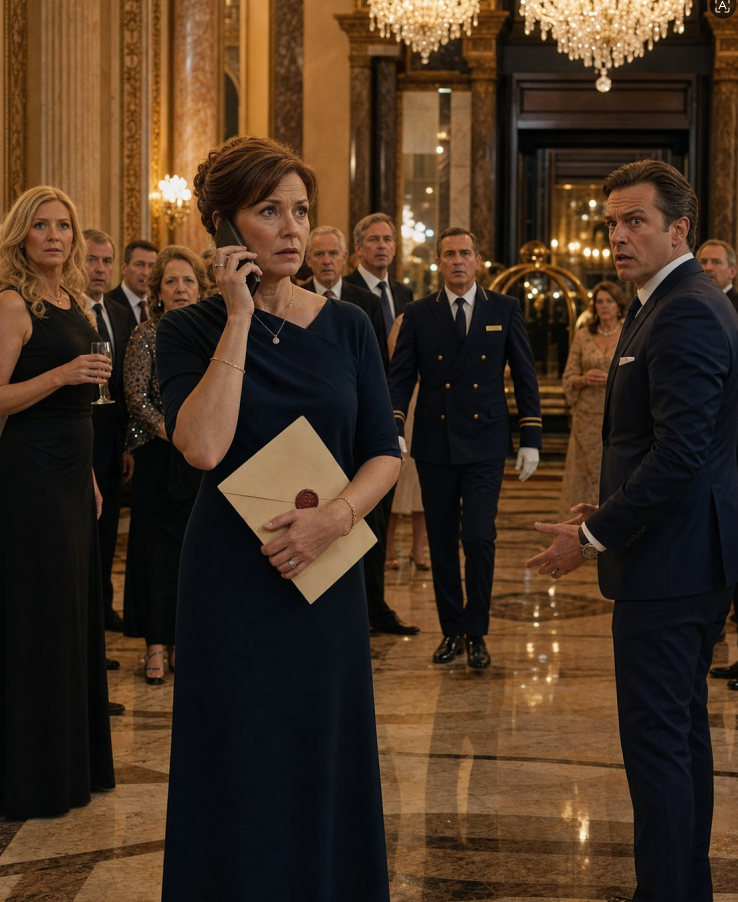
I had to stop and breathe. Mr. Feldman waited.
“The Hale Grand is yours,” the letter went on. “The building, the land, the whole foolish glittering thing. I know a man named Dorian Vale has been circling it for a year, trying to buy it out from under my estate to gut it into condos. I never liked him. He came to one of my dinners once and spoke to my staff like they were fixtures. I suspect you know the type. The sale cannot close without the owner’s signature, and as of my death, the owner is you. Sign it or don’t. Burn it down or run it better than anyone ever has. It’s yours now. You earned it by being kind to an old woman when kindness bought you nothing. — Eleanor.”
I lowered the letter. The ballroom had gone very quiet, the way a room does when everyone is pretending not to listen and failing.
Mr. Feldman spoke, not loudly, but clearly enough to carry. “Ms. Ortiz is the sole owner of this property and every asset of the Hale estate. Any pending sale of the Hale Grand is void without her authorization.” He turned, unhurried, toward the champagne tower. “Mr. Vale, I believe you were told this deal was closing tonight. I’m afraid you were misinformed.”
Dorian set his glass down like it had gotten too heavy. “Camille?” he said, and my name in his mouth was a question and an accusation at once. He finally saw me, really saw me, under the uniform and the fluorescent shame he’d toasted to five minutes ago. “You — this is some kind of —”
“It’s not a joke,” I said. My voice was steadier than I expected. “You told these people to vet their staff. You should have vetted your seller.”
The banquet captain who’d fired me had gone the color of the tablecloths. He started toward me with an apology already forming, and I held up one hand, and he stopped. It was strange, how fast a hand can carry weight when everyone in the room has just learned whose hand it is.
I didn’t do anything cruel. I want you to know that. I’d spent too many years being the person things were done to, and I’d watched Eleanor waste the last of her energy on grudges, and I didn’t want to become that. So I didn’t have Dorian thrown out. I didn’t make a speech. I just walked to the center of the floor in my black uniform, and I said, to the room, “The Hale Grand isn’t for sale. It never was. Please, enjoy your evening.” And then I asked the quartet to keep playing.
The acquisition died that night. Dorian’s investors, it turned out, had a great deal of appetite for a done deal and none at all for a public embarrassment, and by Monday they’d quietly walked. He called me eleven times that week. I answered once, long enough to say that if he wanted to discuss the property, he could make an appointment like anyone else, through my office. He never did. Some men can’t bear to sit on the other side of a desk from a woman they taught themselves to look down on.
I kept the hotel. I’m still learning how to run it, and I make mistakes, and there are nights the numbers frighten me. But the first thing I did was end the practice of humiliating staff in front of guests. The second thing I did was hang a small framed photo of Eleanor in the lobby, near the tea service I added, the good loose-leaf kind, free for anyone who wants a cup.
People ask about the woman in the photo. I tell them the truth. She was someone almost no one bothered to be kind to, and she remembered the one person who was. I tell them kindness isn’t a strategy. I wasn’t nice to her to get anything. That’s exactly why it meant something.
And every night, when I lock up the ballroom where I was once fired, I think about how close I came to walking out those doors in shame, and how the whole shape of my life turned on a letter from a woman who simply wanted to be seen. I make her tea the way she liked it. I drink a cup for her. Then I go home to a life she gave me, not because I chased it, but because for two quiet years I treated a lonely old woman like she mattered.
She did. She still does. And now, so do I.
Comments are closed.