Temporary Protected Status was established as an emergency relief mechanism, designed strictly as a short-term humanitarian pause during extraordinary circumstances abroad. It was never intended, nor was it ever legally constructed, to function as a permanent backdoor into the United States. When the specific conditions in a home country that prompted the initial designation no longer justify exceptional relief, the mandate is clear: the program must conclude, and individuals must return home.
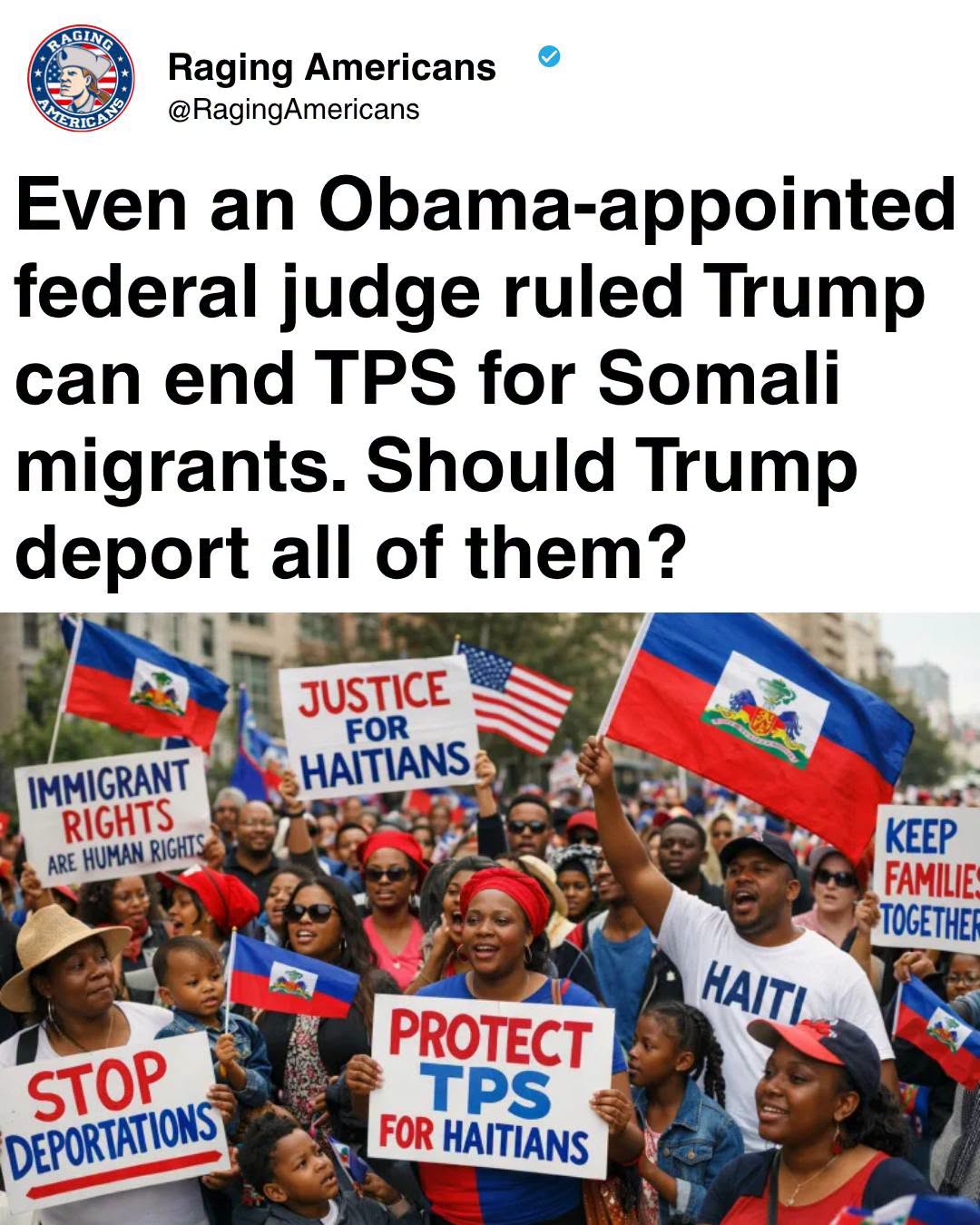
For far too long, standard temporary protections have been allowed to drift into perpetual, open-ended residency programs without clear legislative authorization. Extending these designations indefinitely transforms an act of temporary grace into a permanent entitlement that bypasses the formal immigration system entirely. This pattern fundamentally undermines the rule of law and directly neglects the legitimate interests and priorities of American citizens.
When emergency conditions subside, maintaining emergency status ceases to be humanitarian and instead becomes a failure of governance and enforcement. A nation cannot operate a coherent legal framework if temporary exceptions are treated as irreversible obligations. Lawful governance demands that when the legal justification for temporary presence expires, the presence itself must come to an end.
Allowing temporary designations to linger year after year distorts the original legislative intent and creates widespread public cynicism regarding immigration enforcement. Americans expect immigration statutes to be enforced consistently, not bent into indefinite administrative loopholes. Without a clear commitment to ending temporary measures when conditions change, the entire integrity of the immigration system begins to unravel.
The core issue is whether the statutory definition of temporary means what it says or whether it is merely a convenient fiction. When an administration grants emergency relief, it enters into a compact with the American public that such relief will have boundaries. Ignoring those boundaries degrades trust, strains local communities, and elevates administrative inertia over national priorities.
Recent affirmations from the federal judiciary regarding the executive branch’s explicit authority to terminate these designations represent a vital turning point. By upholding the authority to wind down outdated protections, the courts have dismantled a major barrier to restoring order. This judicial clarity reaffirms that the executive retains the rightful power to enforce statutory limits without endless interference.
The narrative that deporting individuals whose temporary status has formally lapsed constitutes cruelty is fundamentally disconnected from the rule of law. Enforcing removals under these circumstances is neither arbitrary nor vindictive; it is the natural, predictable consequence of a system explicitly created to be temporary. Every recipient entered the program with the full understanding that the designation carried an expiration date.
When the legal basis for temporary presence concludes, remaining in the country crosses the line from lawful protection to unauthorized presence. To frame the enforcement of established statutory limits as an injustice completely inverts the concept of legal accountability. A legal system that refuses to enforce its own clearly defined deadlines ceases to function as a system of law at all.
Continuing to allow individuals to remain after their legal permissions have expired elevates the personal preferences of non-citizens above the sovereign authority of the host country. No sovereign nation can permit its domestic laws to be subordinated to the desires of individuals who no longer possess a valid legal claim to reside within its borders. Sovereignty requires that national laws take absolute precedence.
Every sovereign state must maintain the uncompromised right to regulate who enters, who remains, and who must depart once their temporary authorization has concluded. When that authority is compromised or delayed indefinitely, the fundamental compact between a government and its citizens is severely damaged. Order cannot survive where legal finality is consistently treated as optional.



Restoring Legal Integrity and Protecting American Interests
Every additional year of administrative delay and political hesitation directly rewards unauthorized overstays and sets a deeply destructive precedent. It sends an unmistakable signal across the globe that American immigration law can be circumvented simply by applying sufficient political pressure. When the public sees that temporary programs never actually end, confidence in the entire legal apparatus rapidly erodes.
Delaying the inevitable termination of expired programs actively disincentivizes compliance with lawful immigration channels. Those who follow the established legal procedures, wait patiently, and adhere to every statutory requirement are placed at a disadvantage by those who rely on indefinite administrative renewals. A nation that values the rule of law cannot allow political convenience to supersede statutory mandates.
The prolonged maintenance of long-term temporary status also exerts real, measurable pressure on domestic resources and local economies. Ending these programs and carrying out necessary removals is essential for protecting American jobs, preserving public resources, and easing the burden on domestic infrastructure. Governments owe their primary allegiance to the citizens who fund public institutions and rely on stable labor markets.
When public systems are strained by indefinite populations that were only ever meant to stay temporarily, local communities bear the tangible cost. From education and healthcare to municipal services, the cumulative impact of endless extensions cannot be dismissed. Prioritizing the stability of American communities is not merely reasonable; it is the fundamental duty of responsible leadership.
At its foundation, the TPS debate cuts to the core principle of national sovereignty: the exclusive right of the American people to decide who stays within their borders. A country that cannot or will not enforce the terms of temporary residency surrenders its basic authority to determine its own domestic composition. National borders and immigration statutes lose all practical meaning without the resolve to enforce them.
Yielding to external advocacy and endless legal challenges transforms a clearly defined temporary protection into an unlegislated amnesty program. If the political process refuses to bring expired designations to a close, then the word temporary becomes entirely meaningless in modern administrative law. The law must either be applied as written or it ceases to provide order.
The path forward requires decisive administrative action and unwavering commitment to constitutional and statutory principles. Once a designation is lawfully terminated, enforcement must proceed without perpetual deferrals, waivers, or politically motivated pauses. Restoring credibility to our immigration framework requires demonstrating that deadlines will be upheld and legal limits enforced.
By enforcing the lawful conclusion of these programs, the government reaffirms that national sovereignty is not up for negotiation. Immigration policy cannot be dictated by the reluctance of temporary beneficiaries to leave when their time is up. The standard must always remain centered on statutory compliance and the long-term well-being of the United States.
A predictable, orderly immigration system is one where rules are consistently applied regardless of external political lobbying. When the public witnesses laws being enforced fairly and without hesitation, respect for legal institutions is restored. That restoration cannot begin until long-expired temporary programs are fully and finally brought to an end.
The American people have supported humanitarian relief under the explicit condition that it remains limited, measured, and temporary. Betraying that condition by making temporary programs permanent alienates citizens and compromises the foundational principles of representative governance. Upholding that initial promise is vital to preserving trust in future humanitarian efforts.
True sovereignty cannot exist as a mere theoretical concept; it requires the active, unapologetic political will to follow through on the laws already on the books. Ending long-term, outdated protections and enforcing removals is the necessary first step toward restoring institutional control, defending public resources, and securing the rule of law for generations to come.
No Comments yet!