The latest campaign finance disclosures have exposed a staggering divide that is sending shockwaves across the political landscape. Fresh filings from the Federal Election Commission reveal that Democrats are still saddled with a crushing $17 million debt from Kamala Harris’s failed presidential run. Meanwhile, the opposing party is sitting on a massive war chest boasting more than $130 million in available cash.
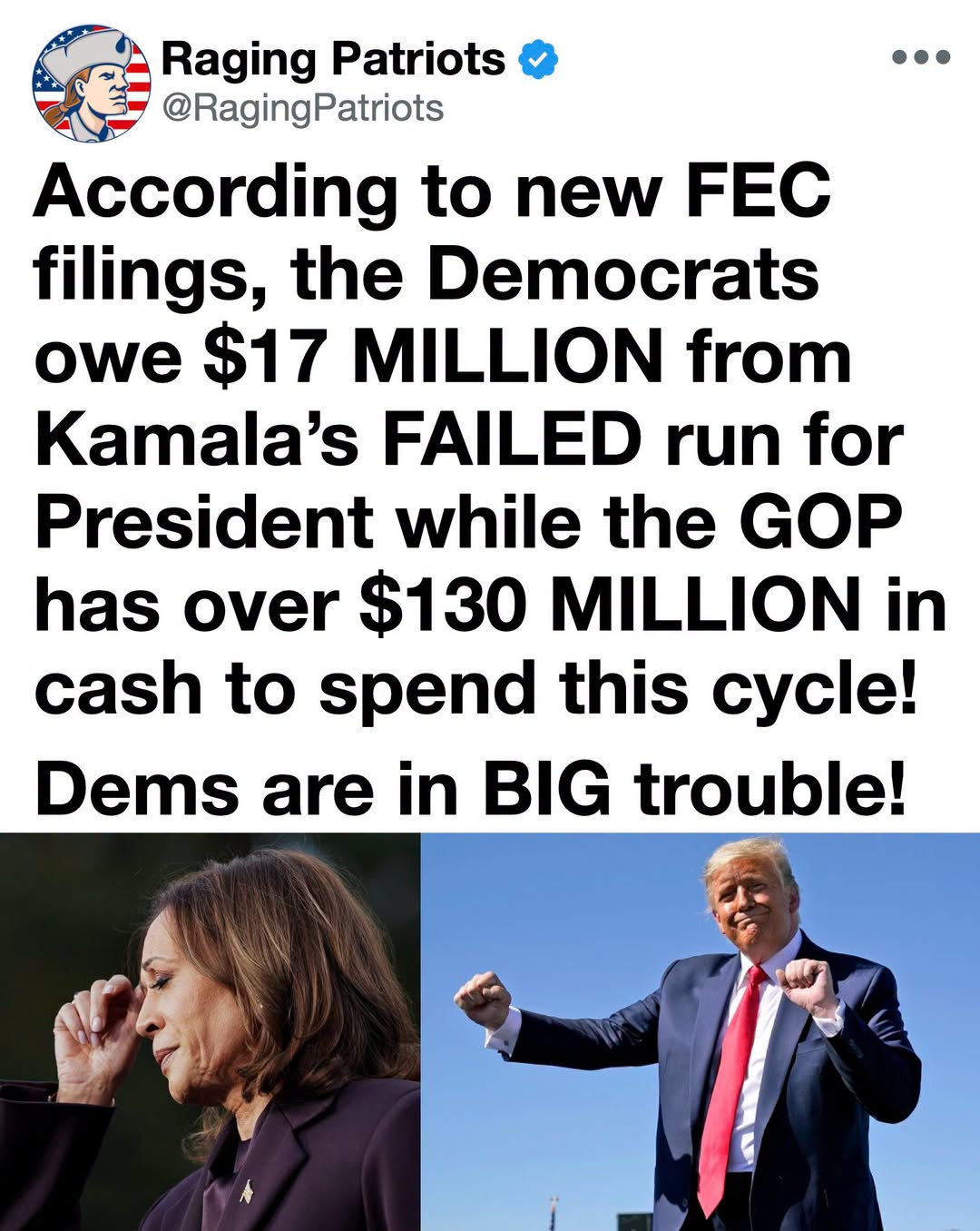
This massive disparity reveals the true toll of a lavish campaign that burned through unprecedented resources and still came up empty. Observers point out that the financial hangover is not just an embarrassment, but a crippling obstacle that threatens to paralyze future political efforts. Instead of building momentum, one side is now stuck paying off the bills of yesterday’s defeat.
Running an aggressive national campaign requires immense capital, but spending at record levels without securing a victory creates lasting damage. The millions poured into high-profile outreach failed to deliver the ultimate prize at the ballot box. Now, the aftermath has left party leadership facing harsh arithmetic as past obligations swallow up vital funding.
On the other side of the ledger, the financial picture could not be more radically different. Holding more than $130 million in reserves provides the opposing party with an extraordinary level of operational freedom. While one side scrambles to balance its books, the other is fully prepared to execute long-term strategic plans without financial constraint.
This vast financial gulf is reshaping the balance of power well before the next major political cycle even gets underway. When one party holds tens of millions in ready cash and the other is drowning in red ink, the playing field tilts dramatically. The gap illustrates how fiscal discipline on one side directly contrasts with unchecked spending on the other.
The High Cost of Campaign Failure
Every dollar forced to service past debt is a dollar that cannot be invested in the future. Political analysts emphasize that debt restricts strategic agility, forcing leadership to divert incoming contributions toward settling old accounts. Rather than funding fresh initiatives, available cash must be directed toward paying off vendors and clearing lingering shortfalls.



This constraint hits hardest at ground-level operations and critical voter communication efforts. Without adequate liquidity, building robust field offices, recruiting organizers, and sustaining widespread outreach becomes an uphill struggle. A depleted treasury directly undermines the ability to compete effectively where elections are ultimately won.
Financial strength is never just about money on paper; it translates directly into message discipline and organizational reach. A well-funded apparatus can maintain a relentless presence, dominating the airwaves and digital platforms while cultivating deep community ties. When resources dry up, that vital presence begins to shrink, leaving a vacuum that opponents can easily exploit.
The current crisis highlights how a series of strategic miscalculations can quickly compound into systemic, long-term disadvantages. Heavy spending without a coherent path to victory has created an anchor dragging down future capabilities. Observers note that rebuilding from such deep deficits requires time, patience, and donor goodwill that may no longer be available.
Meanwhile, an opposing war chest exceeding $130 million allows for continuous, sustained engagement focused on core national priorities. Instead of waiting for election seasons to ramp up, a well-capitalized movement can invest in year-round messaging and voter education. That steady consistency creates structural advantages that indebted opponents simply cannot match.
A Lasting Disadvantage on the Ground
The stark reality of modern politics is that momentum follows financial stability. When campaigns exhaust their resources on flawed strategies, the resulting debt creates a prolonged period of vulnerability. The indebted operation is forced to fight defensive battles at home while their competitors aggressively expand into new territory.
Many have pointed out that closing a massive multi-million-dollar gap requires more than just fundraising appeals; it demands fundamental organizational reform. Donors are often hesitant to pour fresh money into servicing past failures when they want to see immediate results. That hesitation only widens the chasm between the two sides.
As the numbers make undeniably clear, fiscal management at the highest level of politics carries real and enduring consequences. One side enters the coming challenges burdened by the weight of a $17 million shortfall, while the other stands ready with over $130 million to shape the national agenda. In the high-stakes arena of national leadership, the price of miscalculation has never been clearer.
No Comments yet!