A silent, devastating wave of financial theft is sweeping across the country, striking everyday Americans directly where it hurts most. Federal law enforcement agencies have officially sounded the alarm, launching a massive, multi-state investigation into an aggressive criminal operation targeting consumer bank accounts. This high-stakes federal response highlights just how dangerous, organized, and pervasive this modern digital threat has truly become.
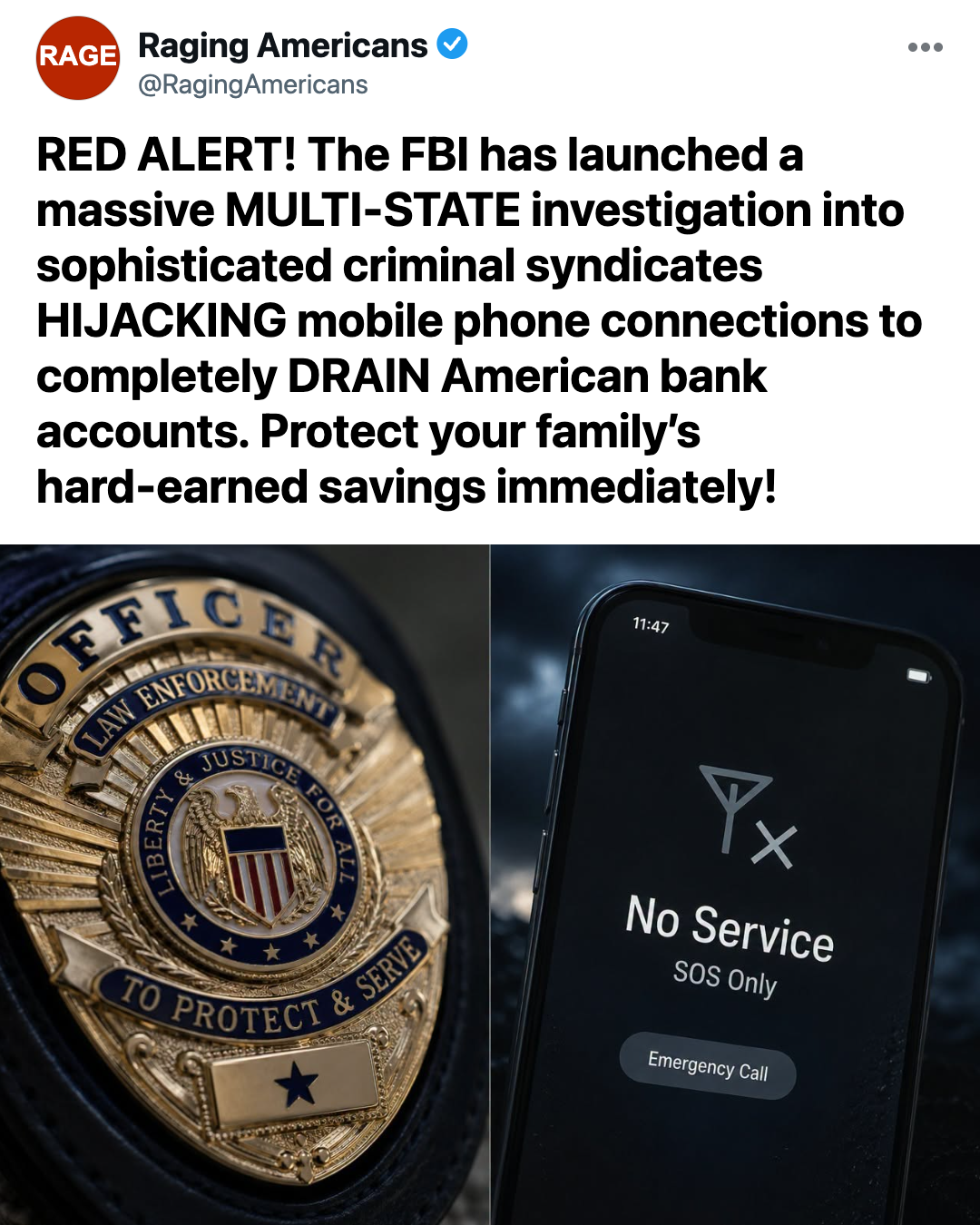
This is not an isolated scam or a series of random, low-level digital mishaps. Official briefings from the FBI and consumer protection agencies confirm that a sophisticated criminal enterprise is actively weaponizing mobile phone lines. Their primary objective is ruthlessly clear: systematically infiltrate private accounts and plunder the hard-earned wealth of everyday families and businesses alike.
According to urgent alerts issued by federal authorities, this predatory network operates with terrifying precision across multiple state borders. Everyday consumers and commercial entities are waking up to discover their accounts completely wiped out without a single warning bell ringing. The staggering speed and scale of these coordinated strikes have caught entire communities completely off guard.
What makes this massive multi-state crackdown so critical is the unprecedented level of technical coordination behind every single heist. Federal investigators are tracking a sprawling web of illicit actors who have mastered the art of turning a standard personal mobile connection into an open gateway for catastrophic financial devastation.
For years, consumers were repeatedly assured that basic security protocols and standard passwords would keep their money completely secure. But as this ongoing federal investigation reveals, the criminal underworld has radically evolved beyond traditional defenses. Outdated security measures are being dismantled daily, leaving hard-working citizens dangerously exposed to aggressive digital predators.
The High-Tech Anatomy of a Mobile Network Takeover
The blueprint behind these devastating breaches begins long before victims ever notice anything wrong with their service. Official briefings reveal that the criminal enterprise systematically exploits vast troves of dark-web data leaks to identify, track, and profile specific targets with chilling accuracy before launching their coordinated offensive.
Once a target is locked in, these bad actors execute a high-tech heist by illegally seizing direct control of the victim’s mobile network connection. By hijacking that vital communication link, the perpetrators effectively sever the victim from their own carrier service, taking absolute command over incoming data, calls, and text messages.
This hostile takeover gives the syndicate instant, unhindered leverage over the victim’s most sensitive digital profiles. With total control over the intercepted network connection, the attackers monitor incoming notifications and verification prompts in real time, all while the genuine account holder remains completely unaware that their identity has been stolen.
The most alarming revelation from federal investigators is how effortlessly this sophisticated scheme bypasses traditional two-factor bank security. The very system that financial institutions have championed for years to protect consumer wealth is rendered entirely powerless the exact second a victim’s mobile line is compromised.
Once inside the digital perimeter, these international and domestic fraud rings move with devastating efficiency and speed. They drain both personal checking balances and major corporate accounts completely blind, laundering funds through complex channels before victims or local law enforcement agencies even realize a crime has taken place.



A Modern Battleground and the Demand for Accountability
This alarming crisis pulls back the curtain on the brutal reality of modern financial warfare. We are no longer dealing with petty pickpockets or unsophisticated scammers, but with highly coordinated international and domestic rings capable of dismantling an individual’s financial livelihood from thousands of miles away with surgical precision.
The sheer devastation of these attacks has ignited intense public scrutiny over the roles played by major institutions. Observers everywhere are asking whether major mobile carriers and banking giants are truly doing enough to safeguard user data, or if corporate complacency is allowing these multi-state cyber rings to thrive.
When organized criminal syndicates can hijack a consumer’s mobile line and effortlessly loot their life savings, the baseline standard of corporate responsibility must be challenged. Critics argue that continuing to rely on fragile cellular network alerts represents an unacceptable vulnerability for millions of hard-working account holders across the nation.
At the same time, many are demanding that federal lawmakers step up and enact significantly tougher legal penalties against cyber-crimes. Many have pointed out that without aggressive federal enforcement and severe statutory consequences, these transnational fraud networks will continue operating with total disregard for the law.
Until sweeping institutional reforms are enforced across both the telecommunications and financial sectors, everyday citizens remain on the front lines. The heavy burden of defense has fallen squarely onto consumers, who must now take immediate and decisive action to fortify their personal accounts against predatory digital intrusions.
While federal law enforcement continues its expansive multi-state investigation into these coordinated networks, security experts emphasize that personal vigilance is mandatory. The long-standing habit of relying on standard text messages for sensitive banking alerts and transaction verifications must come to an immediate and permanent halt.
Because cellular text messages are easily intercepted once a mobile network connection is hijacked, standard SMS alerts offer zero real protection against high-tech heists. Security professionals strongly advise every account holder to immediately migrate all sensitive banking alerts and login safeguards over to standalone authenticator applications.
Standalone authenticator apps generate secure, time-sensitive access codes directly on your physical hardware rather than transmitting vulnerable data across an open mobile network. This simple yet vital switch cuts off the syndicate’s ability to intercept codes, effectively locking down your financial accounts even if your cellular connection is compromised.
Taking control of your digital security protocols is no longer an optional recommendation; it is an urgent necessity. As high-tech fraud rings continue to deploy sophisticated tools against consumer accounts, failing to upgrade your basic security settings leaves the front door wide open to catastrophic financial loss.
The urgent warnings issued by the FBI and consumer protection agencies cannot be ignored. In an era where financial warfare is conducted through mobile networks and dark-web leaks, staying informed, proactive, and securely fortified is the only way to ensure your accounts do not become the next victim.
No Comments yet!