It started with a terrifying email that weaponized pure panic against an unsuspecting elderly Michigan couple. In 2025, the couple was falsely told that horrifying, illegal transactions involving minors were pending on their credit card.
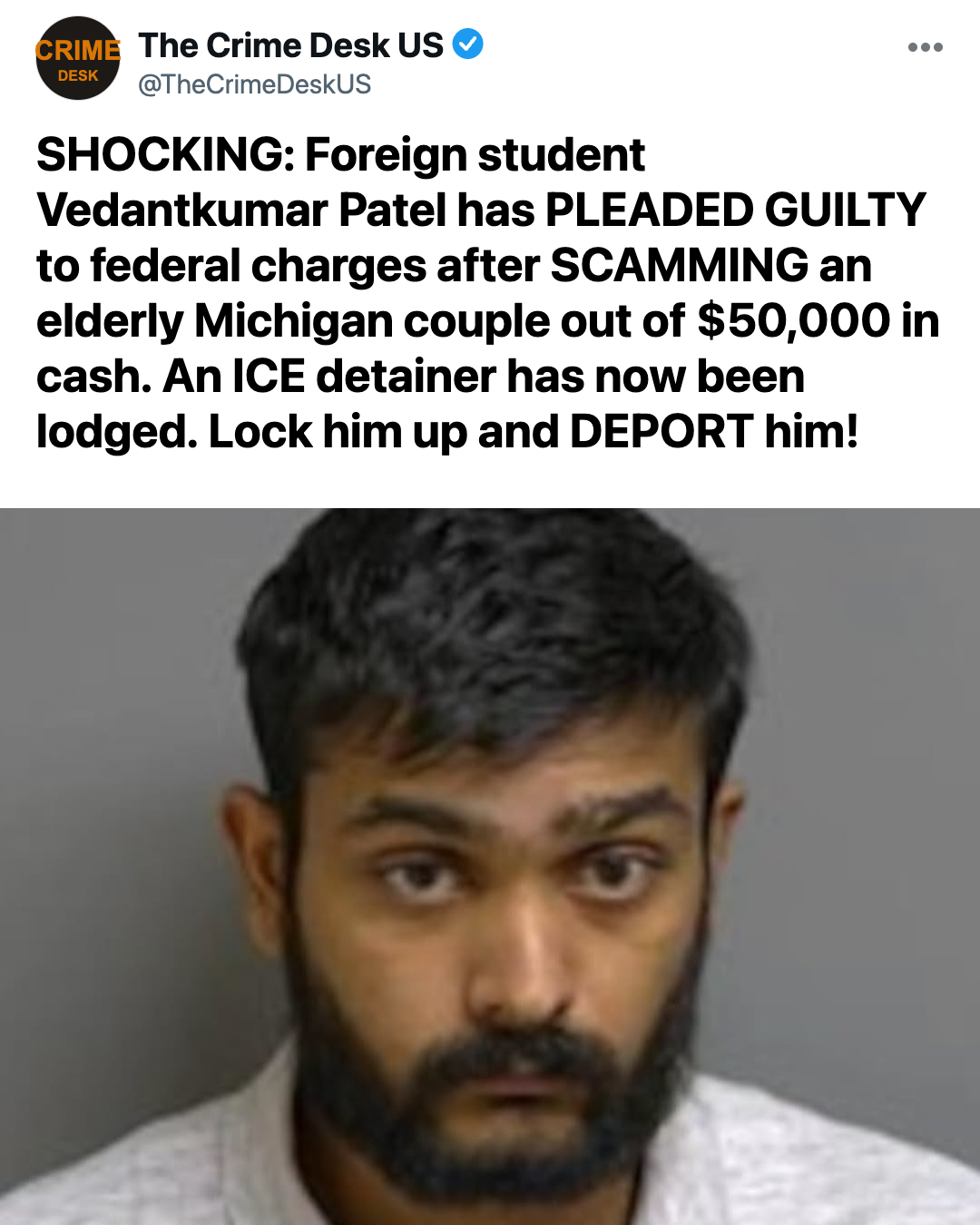
The perpetrators engineered a psychological trap designed to disorient and terrify their targets into immediate, unquestioning compliance. Authorities revealed that the victims were told the only way to stop the devastating charges was to pull $50,000 in physical cash directly from their bank.
Every single step of the operation was calculated to eliminate any chance of the victims seeking outside help or sound advice. Investigators discovered the fraudsters strictly ordered the couple to place the massive sum inside a box and maintain absolute secrecy.
To give the extortion a veneer of official legitimacy, the scammers claimed an agent from the U.S. Treasury Department would personally arrive to collect the money. Under intense psychological pressure and fearing total financial and reputational ruin, the vulnerable couple followed the elaborate instructions.
The demand for total silence ensured that bank tellers, loved ones, or law enforcement could not intervene before the trap snapped shut. It represents a ruthless evolution in modern elder fraud, where digital fear tactics seamlessly transition into real-world, in-person cash collections.
Two days after initiating the digital ambush, the scheme moved from threatening messages to physical execution on Michigan soil. Authorities stated that then-25-year-old Vedantkumar Bhupenbhai Patel got behind the wheel and drove across state lines from Toledo, Ohio, straight to Shelby Township.
Upon arriving at the designated location, Patel met the frightened couple face-to-face to finalize the predatory transaction. Believing they were handing their life savings to an official entity to clear their names, the victims turned over the box containing $50,000 in cash.
Patel took the package and disappeared, leaving the devastated seniors to slowly realize they had been ruthlessly manipulated. The sheer audacity of driving across state borders to collect illicit cash underscores how emboldened these predatory operations have become.
By the time law enforcement began piecing together the timeline, the stolen money was already moving through shadowy financial channels. Investigators later stated that Patel had likely already transferred the stolen $50,000 back to his hometown in India.
The swift movement of the funds highlights the sophisticated transnational pipeline commonly utilized in modern elder exploitation rings. Once physical currency is handed over at the curb, it is rapidly converted and funneled overseas, leaving victims with virtually zero chance of recovering their savings.
A Web of Coordinated Exploitation
As detectives dug deeper into Patel’s movements, they quickly realized the Shelby Township incident was not an isolated lapse in judgment. Authorities uncovered evidence indicating Patel had been actively attempting to scam other vulnerable individuals out of thousands of dollars.
Law enforcement confirmed that Patel was under active investigation in connection with at least two additional elder fraud cases. The emerging evidence pointed toward an organized, repeated pattern of targeting seniors using high-pressure extortion tactics.
 Swift Justice in Indiana: Why Relentless Police Action and Zero Excuses Are the Only Way to Protect Our Children
 Locked Away and Starved to 35 Pounds: Inside the Unspeakable House of Horrors on Hattie Lane
 Outrage In Los Angeles As ICE Finally Detains Dangerous Multi-Deportee Shielded By Local Non-Cooperation
What made the case even more striking to investigators and community members alike was the background of the courier himself. At the time of the predatory crime spree, Patel was living in Toledo on an active student visa, studying mechanical engineering technology.
Instead of dedicating his time in the United States to his academic pursuits, Patel was functioning as an essential physical link in a cross-border criminal enterprise. Observers note that international fraud syndicates frequently recruit domestic couriers to handle the risky physical collection of illicit cash.
By leveraging individuals residing legally inside the country, these syndicates manage to bridge the gap between overseas call centers and victims’ front doors. Patel provided the critical physical presence needed to turn psychological threats into cold, hard currency.
The coordinated multi-agency response moved quickly to ensure the interstate courier did not slip away from justice. Police officially arrested Patel on April 30, 2025, putting an abrupt end to his travel between Ohio and Michigan.
Following his capture, Patel was extradited back to Michigan to face serious state-level charges, including larceny and false pretenses. Recognizing the severe flight risk and the gravity of the allegations, a judge set his bond at $100,000 cash surety.
The legal hammer did not stop at the state line, as federal prosecutors stepped in to address the broader financial network behind the operation. Authorities hit Patel with serious federal charges, including money laundering conspiracy and concealment money laundering.
When initially confronted with the sweeping federal indictment in court, Patel entered a plea of not guilty. However, the mountain of digital, financial, and physical evidence assembled by state and federal investigators continued to grow.
As the legal proceedings intensified and the criminal allegations became public record, federal immigration authorities took decisive action. U.S. Immigration and Customs Enforcement officially placed a detainer on Patel, signaling immediate deportation proceedings following the resolution of his criminal charges.
The Inevitable Reckoning
The mounting pressure and undeniable paper trail eventually shattered Patel’s initial defense strategy in federal court. On August 20, 2026, official court records confirmed that Patel formally reversed course and pleaded guilty to multiple charges stemming from the $50,000 scam.
The guilty plea marks a decisive legal victory for law enforcement agencies that worked across jurisdictions to dismantle the predatory operation. It brings a formal measure of accountability to an interstate scheme that preyed upon the absolute terror of innocent seniors.
Yet for the victims in Shelby Township, the emotional and financial trauma of handing over $50,000 in cash leaves permanent scars. The predatory nature of accusing elderly citizens of horrific crimes just to force a panic-induced withdrawal represents an exceptionally vile form of theft.
This case serves as an urgent, glaring warning about the ruthless tactics modern criminal enterprises use to exploit fear and authority. Fraudsters rely heavily on isolation, urgency, and manufactured panic to ensure their victims never pause long enough to verify the absurd claims.
The downfall of Vedantkumar Bhupenbhai Patel sends an unmistakable message to cross-border networks and their local foot soldiers alike. No matter how quickly stolen cash is laundered overseas, law enforcement will track the couriers down and ensure they face absolute justice.
No Comments yet!