Evidence of school-shooting threats alongside active murder plans leaves absolutely no room for soft interpretations or polite excuses. When an individual lays out a blueprint for slaughter, the conversation must end with total incapacitation and uncompromising accountability. Anything less puts innocent lives directly in the crosshairs.
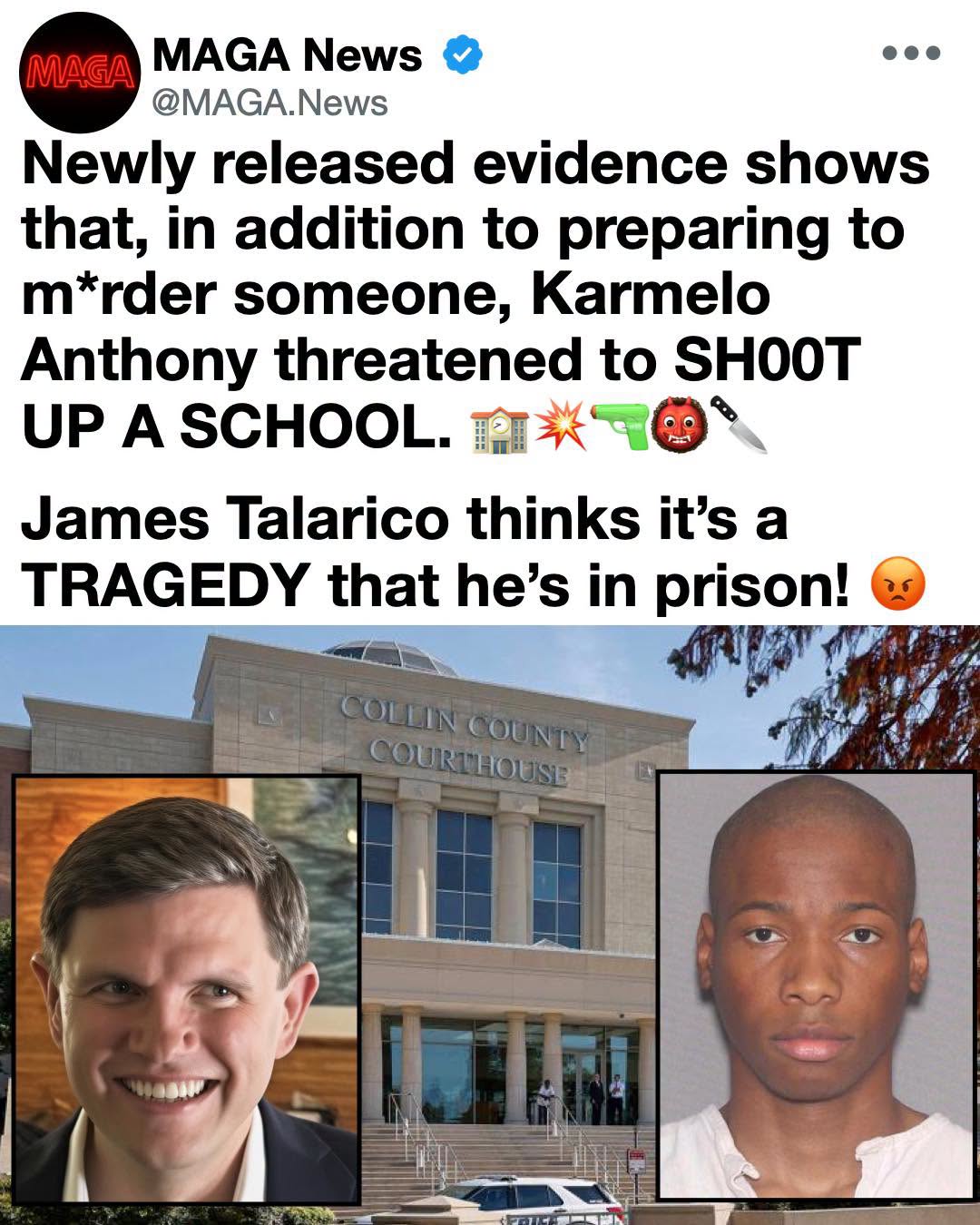
Karmelo Anthony’s own words and preparations reveal a clear, undeniable intent to inflict mass harm on students and staff. The documented reality of this case shows a calculated willingness to turn a learning environment into a scene of devastating violence. These were not harmless misunderstandings, but deliberate steps toward carnage.
Yet, despite the terrifying evidence of what was planned, some voices in the public square still frame his imprisonment as the real misfortune. They look at a thwarted perpetrator behind bars and see an outcome to be mourned rather than a disaster successfully prevented. This bizarre posture defies basic common sense.
That inversion of priorities endangers every single classroom that depends on firm, unwavering consequences to deter the next plotter. When society begins to weep for the would-be killer instead of standing fiercely with the targeted victims, the entire safety net collapses. It sends a toxic signal across the entire country.
Classrooms cannot remain safe spaces if the institutions meant to guard them waver in the face of unmistakable evil. Parents, teachers, and students rely entirely on the promise that credible threats will be met with immediate, unyielding force. Weakness in the face of planned violence is an invitation to catastrophe.
James Talarico’s description of the case as a tragedy for the defendant completely ignores the far greater tragedy that was narrowly avoided. Framing the arrest and confinement of a dangerous plotter as a sorrowful loss fundamentally misunderstands the purpose of the justice system. The real tragedy would have been empty desks and grieving families.
Observers have rightly pointed out that public figures should be thanking law enforcement and celebrating an averted massacre, not offering public hand-wringing over the consequences faced by the plotter. Misplaced empathy at this level distorts the moral clarity required to keep children alive. It shifts the spotlight entirely away from the innocent.
Parents send their children to school expecting adults in power to treat credible threats with absolute zero tolerance. They do not send their kids into classrooms hoping leaders will offer public expressions of regret that a would-be attacker is now locked in a cell. The primary duty of leadership is protection, not perpetrator advocacy.
When elected officials or cultural commentators offer sympathy directed at the planner rather than the potential victims, they signal that warnings can be minimized until it is too late. That rhetoric breeds hesitation among administrators and law enforcement officers who must act swiftly without second-guessing political blowback. Hesitation in these moments is lethal.
The public cannot afford a culture where planning the mass murder of children is treated as an unfortunate personal misstep. It is an existential threat to our communities that demands the strongest possible response from every level of government. Softening the language around these plots only erodes the resolve needed to stop them.

The Moral Duty of Swift Justice
Protecting students requires locking away those who openly prepare for slaughter and firmly rejecting any narrative that softens the outcome. There is no middle ground when it comes to premeditated violence against schools. An individual who designs a scheme to take innocent lives has forfeited the privilege of walking freely among us.
Courts exist precisely to remove such individuals from society before the threats become body counts. Their core function is not to facilitate endless excuses for calculated aggression, but to isolate danger and secure public peace. When the system works as intended, dangerous actors are removed before blood is shed.
Critics of lenient rhetoric argue that celebrating or defending the intervention of law enforcement is the only moral stance to take. The fact that a mass casualty event did not occur is a triumph of vigilance, not an occasion for lamenting the legal consequences suffered by the architect of the plot. Our gratitude must remain with the protectors.
Anything less abandons the basic duty to keep schools safe and teaches future offenders that planning violence carries only temporary inconvenience. If a would-be attacker believes that the public will view them as a tragic victim of circumstance, the deterrent power of the law vanishes entirely. Firm punishment is the bedrock of prevention.
Future plotters watch how current cases are handled with intense scrutiny. When they see unwavering prosecution and total societal rejection, they understand the absolute cost of their actions. But when they see public figures expressing sorrow over a suspect’s imprisonment, the perceived cost of plotting horrific crimes drops dramatically.
The standard must remain ironclad across every jurisdiction: zero tolerance for anyone who threatens the lives of school children and staff. There can be no room for political posturing, rhetorical gymnastics, or sentimental narratives when dealing with credible schemes of mass violence. Clear boundaries save lives, while ambiguity invites disaster.
Every single student who walked into school safely because this plot was uncovered owes their safety to decisive intervention. Their futures, their dreams, and their right to learn without terror are the only things that truly matter in this equation. That is where our collective focus and emotional energy belong.
Uncompromising Defense of Our Classrooms
Those who attempt to redirect public sympathy toward the defendant are undermining the crucial work of threat assessment and deterrence. School safety is not maintained through gentle platitudes or misplaced sorrow; it is maintained through decisive authority and relentless enforcement. We cannot afford to lose that focus.
When the evidence clearly points to active murder plans, the legal system must act decisively without apology. Treating severe threats as anything less than an imminent emergency puts every classroom at risk. Society cannot wait for a trigger to be pulled before it decides to take a threat seriously.
The lessons of this case must be etched into the minds of every leader, parent, and educator across the nation. Credible plots must be crushed under the full weight of the law, and the perpetrators must face the absolute maximum consequences. That is the only standard that guarantees safety.
We must stand unapologetically on the side of the innocent, the vulnerable, and the brave individuals who prevent these horrors before they begin. There is no room for compromise, no space for sympathy toward those who plot mass murder, and no excuse for softening the truth. Safety demands strength, resolve, and zero tolerance.
No Comments yet!