Portugal has drawn a decisive, uncompromising line in the sand by officially outlawing the burqa across its public spaces. This pivotal move cuts right to the heart of what it means to preserve an open, cohesive, and secure civilization in an increasingly uncertain world.
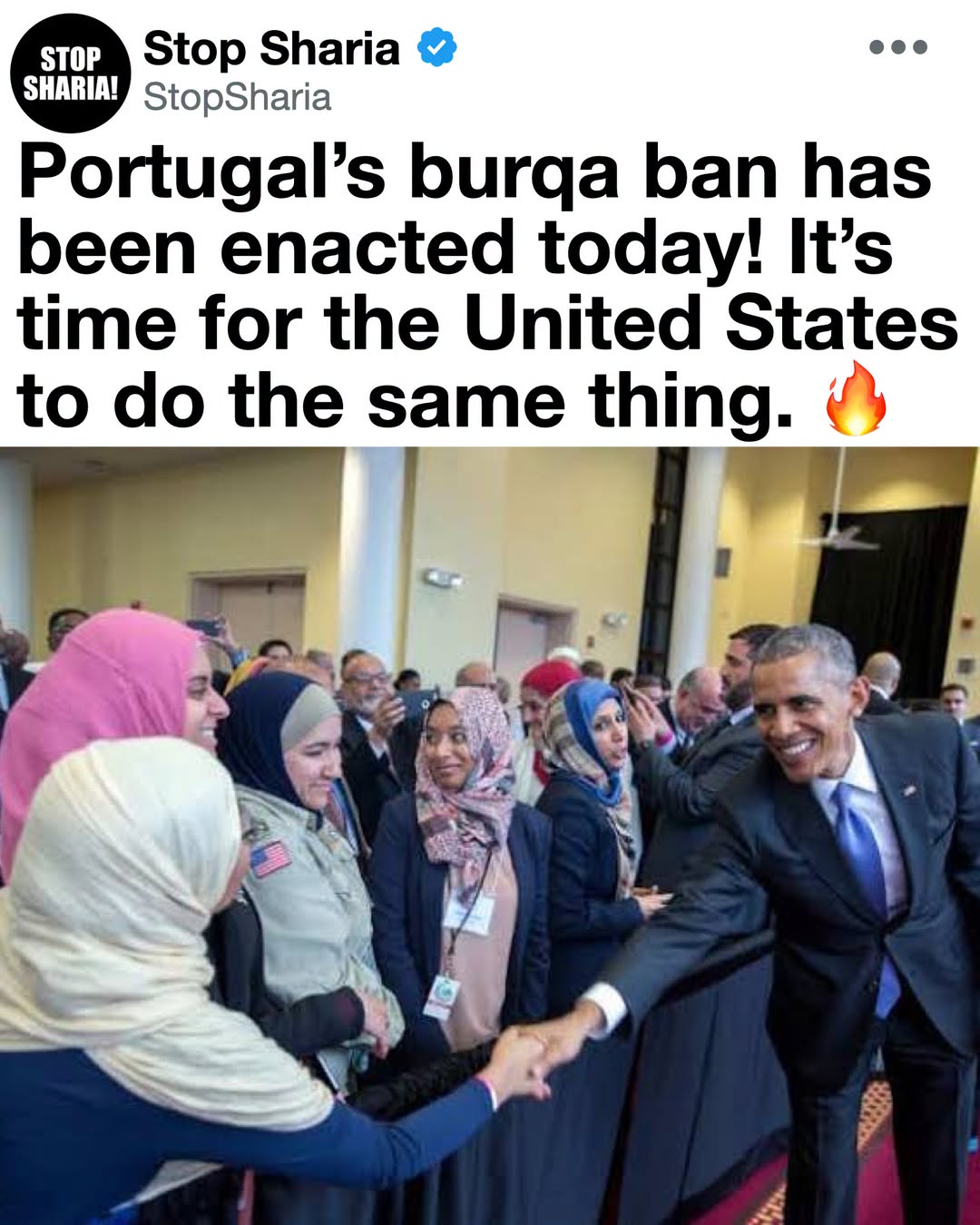
For far too long, Western societies have danced around the fundamental reality that full face coverings directly clash with the basic mechanics of an open society. When individuals conceal their identities in plain sight, the essential social contract of mutual recognition instantly begins to unravel.
Every functioning free society relies on a simple, foundational premise: citizens must be able to see one another and engage on equal, transparent terms. Portugal’s decisive action firmly recognizes that public identity cannot be treated as an optional luxury or a customizable preference.
By enforcing this standard, Portugal has sent an unmistakable message across the globe that real public safety and shared civic norms take absolute precedence over imported customs. When a sovereign nation decides to protect its cultural foundations, it establishes clear boundaries that refuse to bend to outside demands for special treatment.
Security screening is not merely an abstract concept; it is an everyday operational requirement that protects innocent lives in shared environments. Whether navigating crowded transportation hubs, government facilities, or neighborhood streets, visibility remains the first and most critical line of defense.
Allowing individuals to completely mask their physical identity compromises baseline security protocols and creates immense vulnerabilities that authorities cannot ignore. Law enforcement officers and security personnel cannot effectively perform their duties when forced to operate around arbitrary exemptions that shield faces from view.
Practical safety measures must apply equally to every single person walking down a public thoroughfare without exception or hesitation. When a nation prioritizes clarity and common sense, it eliminates dangerous double standards and reinforces the fundamental integrity of its public institutions.
The ability of citizens to look each other in the eye forms the bedrock of social trust and everyday human interaction. When that basic visual connection is severed, suspicion and division naturally fill the void, fracturing the social fabric of local communities.
Nations that take their sovereignty seriously understand that a cohesive society cannot survive if it permits parallel codes of conduct. Shared civic norms are not arbitrary rules; they are the hard-won cultural pillars that allow diverse communities to function together peacefully under one common umbrella.
By contrast, the United States has spent decades tolerating practices that permit individuals to hide their faces across critical public arenas. From sensitive airport terminals and solemn courtrooms to public schools and city streets, America has permitted blind spots that no self-respecting free country should ever tolerate.
The Dangerous Cost of Negotiating American Standards
When past leaders celebrated these divisive displays without question, they signaled to the world that core American standards of visibility and equality were open for negotiation. That passive posture sent a disastrous message that foundational civic expectations could simply be brushed aside to accommodate ideological demands.
This persistent retreat has left everyday communities grappling with the fallout of fractured expectations and weakened social cohesion. Instead of reinforcing a single, unified standard of public conduct, leadership failures allowed two competing sets of rules to take root across the nation.
 California man Tyler McCain, charged with killing missing wife to stop domestic violence testimony, gets trial delayed until 2027
 Chilling court history emerges after California man David Moreno allegedly murdered estranged wife outside Denny’s
 Kentucky burglary suspect Eric Hillirech indicted after stolen tools hit a pawn shop was busted riding a bicycle
When the rules of public engagement are applied unevenly, everyday trust between neighbors and civic institutions inevitably erodes. Citizens quickly realize that the foundational expectation of equal transparency is being enforced for some while completely waived for others.
A constitutional republic cannot sustain itself on double standards that excuse certain groups from the universal expectations of public life. The American system was purposefully designed around equal accountability under the law, where every citizen stands before the public square on identical footing.
Hiding one’s identity in critical spaces like courtrooms strikes directly at the heart of justice, where accountability and face-to-face testimony are indispensable. Allowing facial concealment in the very halls where truth is adjudicated undermines the solemn integrity of the entire legal process.
The same unacceptable risks unfold in our educational institutions, where transparent communication and safety ought to be paramount. Classrooms and academic environments rely entirely on open engagement, personal connection, and the basic certainty of knowing who is present in the room.
Public streets and civic spaces belong to everyone, which is precisely why they must remain safe, transparent, and uniformly governed. When authorities surrender control over basic visibility, they abandon their primary duty to protect the public and preserve the peace.
The growing push to normalize face concealment represents a direct challenge to the shared heritage and values of Western civilization. These imported practices deliberately reject the time-tested principle that living in a free society requires mutual openness and shared civic responsibility.
Restoring Resolve and Defending the Open Public Square
It is time for the United States to match Portugal’s unwavering resolve and forcefully restore the standard of universal public visibility. American streets must once again be governed by the clear, unapologetic expectation that no individual walks through our communities with their identity concealed.
Face coverings that reject mutual recognition have no legitimate place in a self-governing republic dedicated to equal rights and equal duties. True equality demands that every person present in the public square abides by the exact same baseline rules of transparency and accountability.
Defending this vital boundary is not just about physical security; it is about fiercely preserving the open public square that every citizen relies upon daily. When the public square is protected from radical shifts that demand special status, liberty and order can genuinely flourish side by side.
Western legal traditions were built through centuries of sacrifice to establish individual accountability, transparent governance, and common law protections. Allowing those sacred traditions to be quietly rewritten by incompatible customs erodes the very foundations of American freedom and sovereignty.
True national strength is demonstrated when leaders possess the courage to stand up, draw clear lines, and unashamedly defend their country’s cultural identity. Portugal has led the way by demonstrating that common-sense boundaries can and must be enacted to safeguard national unity.
America must now rise to the moment, put an end to paralyzing hesitation, and firmly reassert that public identity is never optional on our streets. By standing strong and unapologetic, the nation can secure its communities, preserve its legal heritage, and protect the open society for generations to come.
No Comments yet!