When the security of a nation is on the line, there is simply no margin for political games or bureaucratic hesitation. Vital upgrades to secure facilities are not mere administrative suggestions; they represent the frontline defense of our most critical public infrastructure. Halting these essential projects in the name of political preferences directly undermines the practical requirements of national protection.
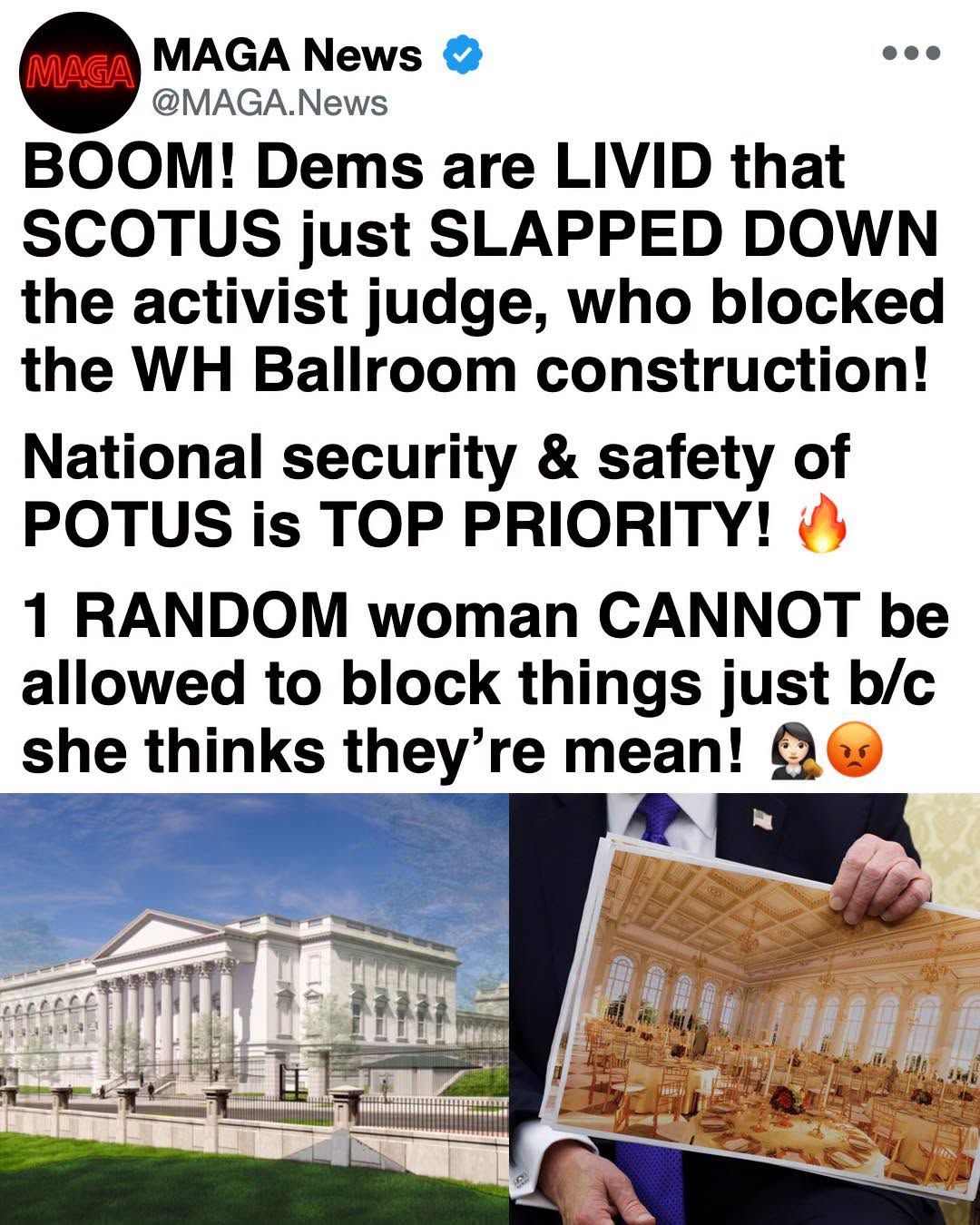
Across the country, an alarming pattern has emerged where lower court interventions actively derail time-sensitive security enhancements. These projects are carefully engineered to boost operational capacity, modernize structural defenses, and protect personnel from emerging risks. When legal roadblocks freeze construction, the resulting operational delays expose critical institutions to completely unnecessary and dangerous vulnerabilities.
Every single day that an essential security upgrade sits idle in a courtroom, the protective posture of that facility degrades. Modern threats do not pause to wait for protracted litigation, nor do they care about judicial grandstanding. The core responsibility of any functioning government is to safeguard its operational nerve centers without being micromanaged from the bench.
The issue goes far beyond legal technicalities; it strikes at the very heart of how we prioritize national resilience over ideological disputes. Observers have long pointed out that practical safety requirements must always outweigh theoretical or political arguments. When lower courts overstep their constitutional lane, they place abstract theories ahead of the tangible safety of frontline personnel.
Fortunately, higher judicial review exists precisely to correct these imbalances and restore rational priorities to our system. By stepping in to dismantle unwarranted injunctions, appellate oversight reaffirms the vital mandate of defending critical installations. This necessary course correction sends an unmistakable signal that national protection cannot be treated as a secondary priority.
Protecting Vital Infrastructure from Activist Gridlock
The men and women who work inside secure facilities perform vital duties that keep the entire country moving forward every day. They deserve environments that are physically robust, technologically modern, and fully equipped to counter contemporary security challenges. Denying them the necessary protections through perpetual courtroom delays is an unforced error that borders on negligence.
When lower courts venture into operational planning, they substitute specialized expertise with personal or political viewpoints. Security assessments are meticulously crafted by professionals who evaluate threat landscapes, structural integrity, and tactical defense needs. Overriding those concrete findings with broad legal interventions creates severe blind spots in our national readiness.
Restoring balance at the highest levels of review is therefore an absolute necessity for enduring public stability. It establishes a firm legal precedent that security-critical projects cannot be paralyzed by endless cycles of local litigation. A nation that cannot rapidly fortify its own critical assets becomes inherently fragile and unpredictable.
Critics of these court interventions rightly emphasize that delays do not merely cost time and taxpayer resources; they actively invite risk. A half-finished security perimeter or an uncompleted infrastructure upgrade provides zero real-world protection against actual threats. Progress must continue uninterrupted if operational security is to mean anything in practice.
 Accused Casino Worker Pleads Not Guilty to Attempted Murder in Slashing of 5 Coworkers at California Resort
 Times Square knife attacker Pamela Cisneros Lopez who fatally stabbed banker Erin Piacenti was churchgoing mother battling divorce
 The Outrageous Attack on Law Enforcement: Calling Border Security Violence Must Stop
Furthermore, maintaining the operational readiness of government facilities is essential for stable, confident leadership during times of crisis. When leadership sites and secure hubs are compromised by administrative gridlock, the entire framework of public safety suffers. Modernizing these environments is a direct investment in the continuity of our national strength.
The broader public understands this reality clearly and expects common-sense governance over endless courtroom posturing. Everyday citizens want secure, functioning institutions that are prepared for any contingency without being hamstrung by partisan interference. There is little patience left for legal maneuvers that jeopardize the basic integrity of our public safety infrastructure.
Why Single Challenges Cannot Dictate National Strategy
Allowing individual litigants to bring multi-million-dollar defense and infrastructure upgrades to a complete standstill completely distorts orderly governance. While access to the courts is a cornerstone of our system, it was never intended to let single objections paralyze critical protective operations. Broad public safety mandates must take precedence over narrow, symbolic complaints.
Too often, individual challenges ignore the vast, interconnected responsibilities required to maintain functional national infrastructure. When isolated lawsuits are permitted to dictate major outcomes, the entire system of orderly administration breaks down. No government can effectively protect its people if every necessary upgrade is subject to a single litigant’s personal veto.
Clear affirmation of executive and operational authority provides the decisive leadership required to navigate complex, modern security environments. Facilities must have the agility to adapt, reinforce, and expand as threats rapidly evolve across the globe. Endless obstruction only serves to lock vital sites into outdated, vulnerable configurations.
Prioritizing proven security needs over ideological friction is the only responsible way to preserve institutional strength. When decisions are grounded in practical reality rather than symbolic posturing, the entire country benefits from enhanced readiness. Maintaining solid, uninterrupted momentum on infrastructure projects ensures our protective barriers remain consistently unbreachable.
This is about preserving the fundamental framework that makes steady governance and public order possible in the first place. Secure spaces provide the foundation from which leaders operate, coordinate emergency responses, and uphold the rule of law. If those spaces are left vulnerable, the stability of the entire system is placed in jeopardy.
Applying a consistent, unwavering standard of authority safeguards both our institutions and the dedicated individuals who serve within them. The law must work to enable national protection, not dismantle it through procedural paralysis and short-sighted overreach. Upholding this balance is essential for maintaining the operational readiness that keeps our communities safe.
Ultimately, a strong nation is defined by its ability to protect its assets, enforce its standards, and resist needless obstruction. Essential security upgrades must move forward with full confidence, robust backing, and the speed required to meet the moment. Standing firmly behind our national protection is not just a policy choice—it is a patriotic necessity that ensures our enduring freedom and strength.
No Comments yet!