When leadership steps out of the marble halls of Washington and walks onto the shop floor, the conversation changes instantly. Vice President Vance made that clear with his return to Ohio, stopping directly into a local small business to champion an economic reform that cuts straight through the noise. The core mission was unmistakable: putting more hard-earned money back into the pockets of the service workers who power our communities.
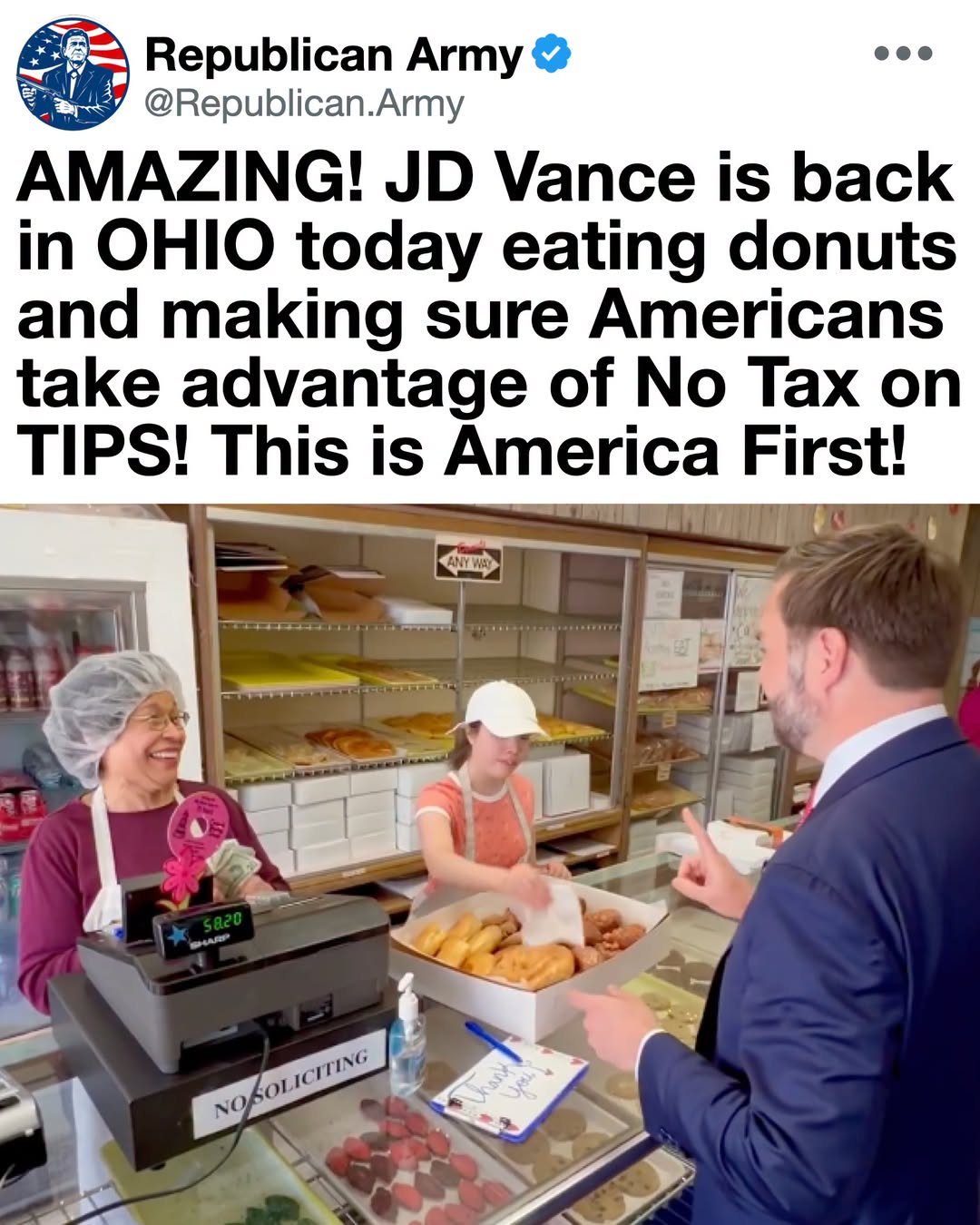
For far too long, the people who work the longest shifts have watched their take-home pay eroded by relentless taxation. Gratuities are not a government subsidy or an automatic corporate handout; they are a direct exchange between a customer and a worker. By spotlighting the push to eliminate federal taxes on tips, the administration is drawing a clear line in the sand for everyday Americans.
The policy itself is built around a fundamentally straightforward reality that service industry personnel understand better than anyone. Servers, drivers, and frontline staff rely heavily on gratuities to support their families and pay their bills. When the federal government claims a cut of that exchange, it penalizes the exact hustle that drives the American service economy forward.
Stepping directly into a local Ohio shop underscores a vital truth about economic policy: relief must reach the ground level to truly matter. High-minded speeches in committee rooms mean nothing if the worker at the counter does not see an immediate difference. Meeting workers where they earn their daily living transforms abstract tax debates into an undeniable, practical reality.
Every single day, millions of men and women rely on discretionary tips to bridge the gap between basic wages and rising living costs. These are the individuals who arrive early, stay late, and ensure local establishments remain open and welcoming. Ensuring that their gratuities remain entirely in their own pockets represents a massive, tangible victory for working-class households across the nation.
What makes this reform so resonant is its sheer simplicity compared to standard government programs. Rather than rolling out complicated tax credits, endless paperwork, or bloated federal programs, this approach delivers instant, direct relief. It simply stops the government from taking what was meant as a direct thank-you from a customer to a worker.
Observers have consistently noted that overly complex economic plans often end up benefiting accountants and bureaucrats far more than frontline staff. By removing the tax burden on tips entirely, the process bypasses every unnecessary administrative barrier. Workers do not need to navigate confusing forms just to keep what they earned through their own grit and hospitality.
This is economic relief stripped down to its most effective, unadulterated form. There is no requirement for new federal agencies, no army of compliance officers, and no labyrinth of regulatory loopholes. The worker earns the tip, the customer provides the reward, and the federal government simply gets out of the way.
The philosophical foundation of this effort is impossible to overlook. Gratuities represent voluntary recognition of extra effort, outstanding service, and personal dedication. For the government to step in and claim a mandatory percentage of that voluntary gesture has always run counter to common sense and fair play.
When leadership actively prioritizes the earnings of everyday Americans, the outcome is measured directly in weekly paychecks. People feel the impact immediately when they balance their checkbooks and pay their monthly bills. It is the type of direct economic breathing room that working families have been demanding for years.
Putting Paychecks and Main Street First
Conversations held across the counter carry a weight that sterile economic reports can never fully capture. In local shops throughout Ohio and across the heartland, service workers are not asking for hollow promises or endless studies. They are looking for straightforward policies that respect the value of hard work and leave them with enough to build a secure future.
 Exonerated Amanda Knox, jailed 4 years over Meredith Kercher’s murder, defends Patrick Clancy from online conspiracy theorists
 Twist in the case of Snowtown serial killer James Vlassakis convicted of four acid-barrel murders
 Disturbing details emerge after 43-year-old woman dies in Shelby County jail on misdemeanor vandalism charge
When money stays in the hands of local service workers, that capital remains right inside the community. Servers and drivers do not squirrel away their earnings in overseas tax shelters; they spend their money at local grocery stores, auto repair shops, and neighborhood businesses. Keeping tips tax-free creates a positive economic ripple effect that strengthens Main Street from the ground up.
Small businesses thrive when their employees are motivated, fairly rewarded, and financially stable. By eliminating taxes on gratuities, establishments can attract and retain dedicated staff without navigating crushing regulatory burdens. It represents a common-sense alignment between the interests of local business owners and the workforce that keeps their doors open.
The visit to Ohio served as a powerful reminder of what true worker-centric governance looks like. Instead of crafting policy to satisfy distant special interests, the focus remains firmly locked on the men and women behind the register. Economic policy is at its strongest when it directly answers the needs of the people doing the heavy lifting.
Many have pointed out that traditional tax structures have disproportionately burdened those who work on variable, tip-dependent wages. By rectifying this disparity, the administration is affirming that every dollar earned through personal dedication should be protected. It acknowledges the unique realities of service-sector employment without imposing new regulatory mandates.
The message coming out of Ohio is loud, clear, and undeniably resonant with the working class. Government should never stand as a barrier between a hardworking citizen and the rewards of their labor. When a patron leaves a tip to acknowledge exceptional service, that money belongs entirely to the person who earned it.
This policy reflects an enduring commitment to putting America’s domestic workforce at the very front of the line. It rejects the outdated notion that economic growth must always trickle down through complex corporate mechanisms. Real prosperity begins by empowering the individuals who show up every single day to serve their neighbors.
By centering economic discussions on practical measures, leadership demonstrates a clear understanding of daily kitchen-table concerns. Working families are focused on groceries, gas, rent, and utility bills, not theoretical economic models. Ending the tax on tips delivers an immediate, recurring benefit that directly eases those persistent financial pressures.
The dynamic between customers and service workers is built entirely on personal connection and mutual respect. Introducing heavy taxation into that direct relationship has only served to diminish the reward for exceptional effort. Removing that barrier restores the integrity of the tip as a true reward for outstanding service.
As the conversation surrounding this policy continues to gain momentum across the country, its foundational appeal remains unbreakable. It is practical, it is fair, and it directly honors the dignity of blue-collar and service-sector work. There is no substitute for policies that deliver immediate results directly to the people who earn them.
The visit to an Ohio storefront serves as a clear blueprint for an agenda focused entirely on working-class prosperity. When leaders show up on Main Street and stand with frontline workers, economic policy becomes personal, powerful, and effective. The path forward is defined by direct relief, fewer bureaucratic burdens, and total respect for hard work.
Ultimately, keeping tips free from federal taxation is a decisive declaration that the earnings of everyday Americans come first. Government must never siphon away the voluntary rewards of honest labor and dedicated service. By keeping hard-earned money in the pockets of working households, the benefits remain exactly where they belong: right at home.
No Comments yet!