I sat on the rooftop terrace with the divorce papers in one hand and the phone against my ear, and the attorney said it again, gently, because I hadn’t answered.
“Mrs. Reeves? The waterfront property. Margaret left all of it to you.”
Below me, through the glass railing, I could see Daniel at our table, checking his watch, so certain he’d already won the only game that mattered.
“There must be a mistake,” I said. “Margaret had a family.”
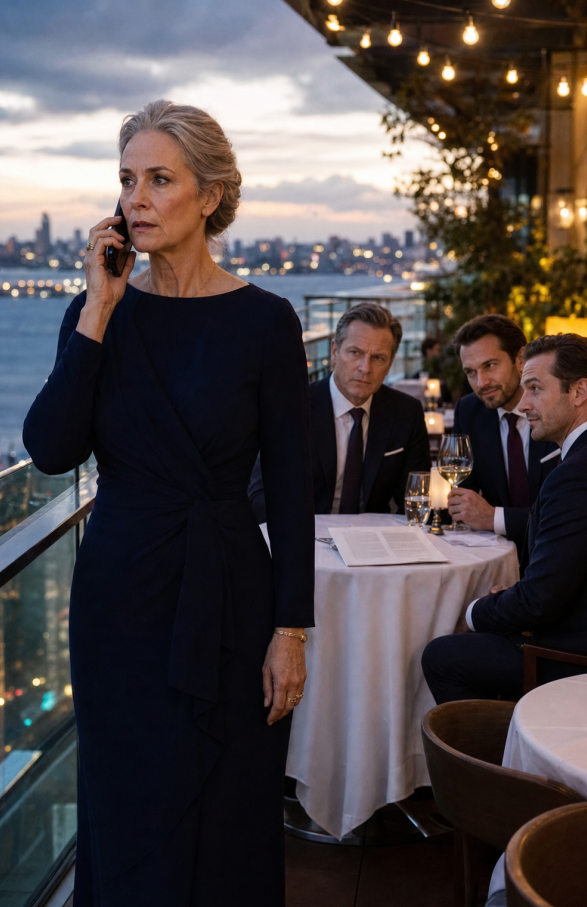
“She had relatives,” the attorney said, with the particular dryness of a man who’d watched those relatives up close. “She was very clear about the distinction. She left them each a letter and a keepsake. She left you the estate, the accounts, and a note she asked me to read to you now. May I?”
I said yes.
“‘Claire,'” he read. “‘You read to me when my own children wouldn’t pick up the phone. You held my hand when there was nothing left in it for you to gain. I looked into you and found no angle, and at my age that is the rarest thing in the world. I know what your husband thinks of your little job. Let him keep thinking it, right up until the moment it costs him everything. The land is yours. Do with it what your conscience tells you. — M.'”
I had to put the phone down for a second.
Here is what Daniel didn’t know, sitting at that table congratulating himself. For three years, his development firm had been quietly trying to assemble the waterfront parcels for a resort project he’d staked his reputation and most of his borrowed money on. One parcel had never budged. One old woman in a waterfront house had refused every offer, every developer, every charming young man in a good suit — including, though he never knew it, including the men Daniel had sent.
That old woman was Margaret. My Margaret. The “little job” Daniel sneered at.
And she had just left the keystone of his entire project to the wife he’d served papers over the appetizer.
I did not go back down to the table right away. I stood at the railing and I let myself feel all of it — the grief, because I had loved Margaret and lost her that morning and hadn’t even had time to cry; and under the grief, rising slow and warm, something that wasn’t quite triumph. Something more like justice with the temperature turned down.
When I finally went back down, Daniel had ordered dessert. For himself.
“You okay?” he asked, not really asking. “You were gone a while. Look, Claire, don’t be dramatic about the papers. Sign them, we both move on.”
“I’ll have my attorney look at them,” I said.
“You don’t have an attorney.”
“I do now,” I said. “The estate provides one. Long story.”
I signed nothing that night. Over the following weeks, the story assembled itself the way these stories do. Daniel’s project needed my parcel. My parcel was not, it turned out, for sale — not to him, not at any number, and there is a special silence that comes over a man when he realizes the asset he needs most in the world is held by the woman he just discarded to look decisive.
He tried charm. He tried lawyers. He tried, God help him, tears. I listened to all of it with the patience Margaret taught me, sitting with people who have run out of moves.
I did not sell to Daniel. His project collapsed under its own borrowed weight, which is what happens to a thing built on the assumption that everyone weaker than you will always stay weak.
But I want to be honest about the part that isn’t clean, because Margaret hated a tidy lie. I did not keep the land as a monument to spite. I sat with it for a long time, and then I did what her note told me to do — what my conscience told me. I put most of the waterfront into a public trust: a stretch of shoreline that can never be walled off, never be resorted, never be sold to a man in a good suit. There’s a bench there now with a small plaque. It doesn’t have Margaret’s full name on it. It just says: For the woman who wouldn’t sell.
I kept the house. I live in it. I read in the chair where I used to read to her.
Daniel remarried within the year, someone who I hope reads her papers carefully.
And every morning I make my coffee and I look out at the water that a lonely, clear-eyed old woman made sure would stay free — and I think about how he called it my little job, right up until the moment it cost him everything.
Exactly like she said it would.
Comments are closed.