The Kesslers had a word for me before they ever knew my name. “Gold-digger.” I heard it the first week I came to the ranch as Tom Vance’s wife, whispered across a table of casserole dishes at a family supper, and I heard it at his funeral eleven months later, and I heard it the loudest the afternoon Dale showed up on the porch with a leased-grazing agreement and a lawyer’s letter and told me I had thirty days to “sign off and clear out.”
“You’ve got no roots here,” Dale said. He said it like it settled something. “Tom felt sorry for you. That’s all this ever was. This land’s been Kessler land for four generations and you’re not going to change that with a marriage certificate and a sad story.”
What Dale didn’t know — what none of them knew, because Tom and I had kept it quiet the way you keep quiet about the things that matter most — was that eight months before he died, my husband had done something none of his family thought him capable of. He’d gotten his affairs in order.
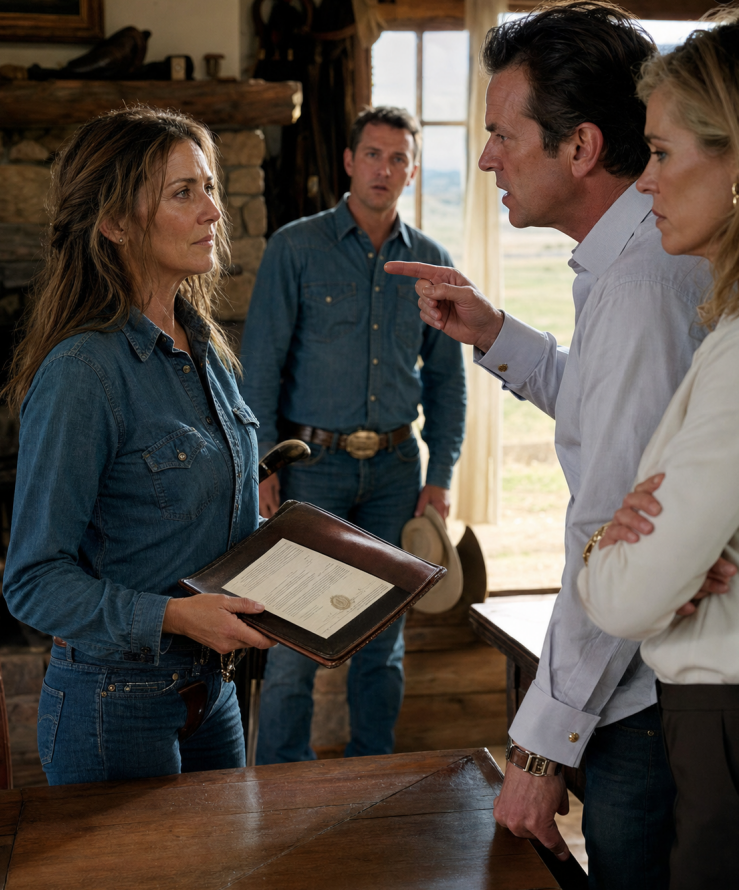
Tom had watched his cousins circle the ranch his whole life. He’d watched Dale lease out grazing rights that weren’t his to lease, watched Brenda “borrow” against acreage on handshake deals, watched the family treat the land his grandfather broke as a collective piggy bank that always seemed to pay out to the loudest voice in the room. And Tom, who was quiet and stubborn and loved that dirt more than he loved being liked, decided that when he was gone, it would go to the one person who’d never once asked him for it.
He put the whole ranch in a trust. My name as sole trustee and beneficiary. Filed and recorded at the county seat, witnessed, notarized, airtight. He didn’t tell his family because he knew what they’d do with a year’s warning. And he didn’t tell me the full extent of it either — he just said, “Marisol, if anything ever happens, you go see Ed Halloran at the recorder’s office. He’ll take care of you.” I thought it was life insurance. I thought it was a savings account.
It was everything.
So when Dale stood on my porch waving his leased-rights paper, I didn’t argue. I’d learned, in eleven months of being called a gold-digger to my face, that arguing with the Kesslers was like arguing with weather. Instead I drove into town and I sat down across from Ed Halloran, and I said the words Tom had told me to say, and Ed opened a file that made his eyebrows climb toward his hairline.
“Mrs. Vance,” he said slowly, “do you understand what your husband did?”
Two things came out of that file. The first was the recorded deed — the trust, with my name on it, controlling every acre the Kesslers had spent a year treating as theirs. The second was worse for Dale. Because when Ed pulled the grazing-rights agreements Dale had been leasing out, collecting checks on for two years, he found my forged signature on a consent form. Consent I had never given. Consent that would have required me to be trustee — which meant Dale had known, at least suspected, about the trust, and had forged my name to keep the money flowing before I found out.
I brought the recorded deed back to the ranch myself. I didn’t raise my voice. I’ve found that the people who are used to shouting get very quiet when you don’t give them anything to shout against. I laid the deed on the porch rail where Dale had laid his lawyer’s letter, and I said, “You’re right that I’ve got no roots here, Dale. I’ve got the whole ground instead.”
He read it twice. Brenda read it over his shoulder, and I watched her sneer come apart, because Brenda was smart enough to understand a recorded document, and smart enough to remember whose name was forged on the grazing consents she’d been spending.
The lease money had to be paid back — to the trust, which is to say, to me. The forged consent went to the county attorney, and while I didn’t push for charges, the mere fact that I could hung over every conversation we had after that like heat over the summer pasture. The Kesslers stopped calling me a gold-digger. They started calling me Mrs. Vance, and then, eventually, when they wanted something, Marisol.
I didn’t clear them off the land. That surprised people. Tom’s land had always been worked by family hands, and I wasn’t going to salt the earth just to make a point. I offered fair leases — real ones, in writing, at market rate — to anyone willing to sign them honestly. Dale never signed. Brenda did.
The ranch runs cattle again this spring. I ride the fence line most mornings, and there’s a rise on the east quarter where you can see the whole spread, and I stop there and I think about a quiet stubborn man who knew exactly what his family was, and who found the one way to protect the thing he loved without ever raising his voice.
Roots, it turns out, aren’t about how long your name’s been on the land. They’re about who the land was trusted to. Tom trusted me. And every fence post out here knows my name now.
Comments are closed.