When it comes to the safety of the Commander-in-Chief and the continuity of the American government, there is no margin for error. The specialized aircraft tasked with transporting the leader of the free world represent far more than ordinary military hardware; they are flying command centers safeguarding the republic itself. Because the stakes are so extraordinary, those granted access to these vital assets must possess unquestioned integrity and unwavering loyalty.
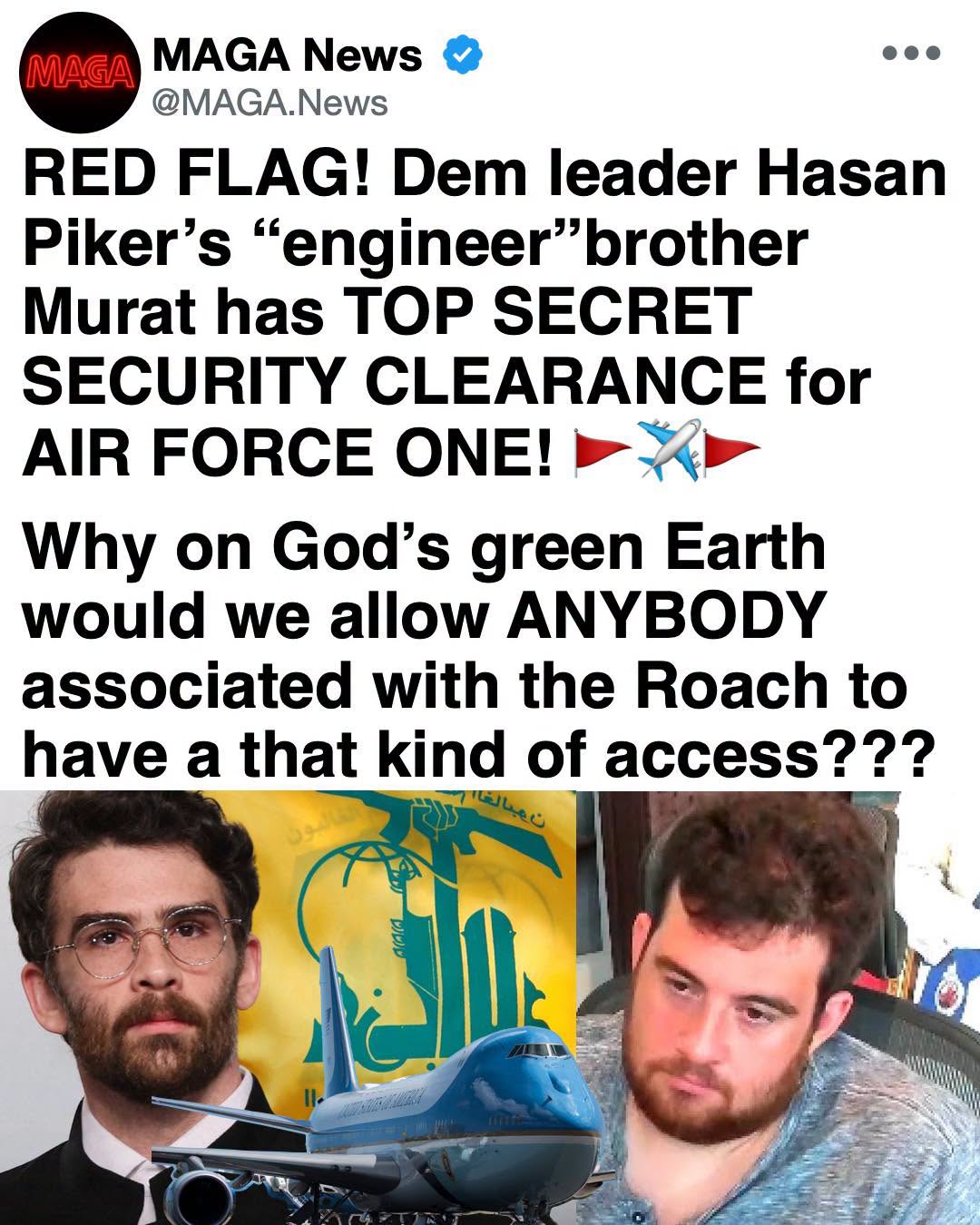
Recent developments have raised serious alarms about the rigor and consistency of the national security vetting process. Serious questions are being asked after reports revealed that top-secret clearances have been granted to individuals closely tied to public figures known for extreme rhetoric and open sympathy toward designated hostile groups. In an era of sophisticated threats, even the appearance of compromised judgment cannot be ignored.
The standard for safeguarding national defense assets has always been uncompromising for a reason. Anyone operating in close proximity to the nation’s highest leadership must demonstrate an unbroken allegiance to the United States Constitution. When personal networks intersect with radical ideologies, the integrity of the entire defense apparatus comes under severe scrutiny.
Public figures who openly excuse or celebrate organizations actively hostile to American interests inevitably create deep security vulnerabilities for those around them. National security professionals have long recognized that familial and personal associations are critical factors in evaluating overall reliability. Ignoring these red flags risks eroding the bedrock foundations of military and presidential security.
The aircraft dedicated to presidential transport are not standard operational units where standard oversights can be brushed aside. They represent the ultimate symbol of American sovereignty and the operational nerve center of the executive branch during times of supreme crisis. Allowing any vulnerability into that perimeter compromises not just a single flight, but the entire command structure.
Clearance determinations must never be influenced by political convenience, personal status, or social connections. The foundational purpose of the vetting process is to identify potential conflicts of interest, foreign entanglements, and ideological pressures before an individual is entrusted with critical state secrets. When that screening process falters, preventable vulnerabilities are introduced at the most critical levels of government.
Observers across the defense community have pointed out that radical rhetoric is rarely an isolated phenomenon. When a prominent commentator uses their platform to validate groups committed to hostility against America, it sends ripples of operational concern throughout the intelligence sphere. Anyone directly linked to those influences carries an inherent risk factor that demands the highest level of scrutiny.
The concept of undivided loyalty is not an arbitrary benchmark invented for bureaucratic convenience. It is the central pillar of military readiness and presidential protection, designed to ensure that those with access to sensitive platforms are immune to external pressure. When background checks fail to fully account for extreme ideological environments, the entire system is exposed to unneeded risk.
Every American expects that the personnel maintaining and operating presidential defense systems have undergone the most rigorous examinations possible. There should never be a shadow of doubt surrounding the reliability or background of those who hold the keys to the nation’s most sensitive operational spaces. The security of the country depends entirely on the absolute dependability of these trusted individuals.
A rigorous review process exists precisely to identify vulnerabilities before they can materialize into direct threats. Background investigators are trained to look beyond basic surface qualifications and examine the broader context of an applicant’s influences, loyalties, and relationships. Overlooking proximity to anti-American extremism undermines the very purpose of that comprehensive investigative architecture.
 Fox Lake mom Pricilla Marshall jailed after son, 11, found bloodied in underwear — with dish soap allegedly poured in his ears
 Florida man installed bedroom cameras to catch a coin thief — and caught wife Malia Nummerdor allegedly having sex with family dog
 Florida convict Brigette Williams was jailed for allegedly stealing an $800 security camera — which recorded her before she took it
The Mandate for Uncompromising Standards and Absolute Vigilance
In high-stakes national defense operations, assumptions and shortcuts are unacceptable. Protecting vital assets requires an active, continuous commitment to identifying any potential vector of compromise or divided allegiance. When vetting procedures appear relaxed or selectively applied, it weakens overall confidence in the entire security apparatus.
The integrity of Air Force One and its supporting fleet depends on a strict policy of zero tolerance for extremist influence. The men and women tasked with supporting these sensitive presidential missions must be held to the highest standard of personal and professional reliability. There is simply no room for leniency when the safety of the leadership of the nation is at stake.
Critics have rightfully emphasized that national security is inherently forward-looking and preventative. Waiting for a compromise to manifest before addressing obvious association risks is a failed strategy that puts the entire country in harm’s way. The goal of every background evaluation must be the proactive elimination of all potential pressure points.
The American public places immense trust in the institutions responsible for vetting sensitive defense personnel. That trust is built on the belief that merit, demonstrated loyalty, and constitutional fidelity are the sole metrics used to award extraordinary access. Any departure from these foundational principles invites dangerous precedent and erodes institutional integrity.
When high-profile commentators promote views that align with designated terrorist entities, the perimeter of national defense must automatically tighten. It is entirely reasonable for citizens and defense analysts alike to demand thorough clarity on how individuals with direct ties to such environments receive high-level access. Defending the nation requires unflinching honesty about the nature of these associations.
The continuity of government depends entirely on the resilience and absolute security of its executive command assets. The aircraft designed to preserve presidential command authority in times of national crisis must remain completely secure from any form of ideological contamination or divided allegiance. Every single link in that operational chain must be fortified against compromise.
Personal ties and familial networks carry undeniable psychological and social weight that cannot be dismissed during standard background investigations. When an individual is surrounded by public defenses of hostile actors, the potential for divided loyalties becomes a matter of urgent institutional concern. To pretend otherwise is to disregard the fundamental principles of counterintelligence.
The vetting apparatus must always prioritize the security of the republic above all other considerations. No individual possesses an inherent entitlement to hold top-secret clearance for the nation’s most critical assets; it is a profound privilege earned through demonstrated, unquestioned dedication to the United States. That privilege must be rigorously protected and revoked whenever valid security concerns arise.
America faces an increasingly complex array of global challenges and asymmetrical threats that seek out any crack in the armor of our defenses. In such a volatile environment, the internal safeguards protecting the executive branch must remain utterly impenetrable. Allowing high-risk associations to bypass standard vetting protocols represents an unforced error the nation cannot afford.
The defense of our nation’s highest office requires unwavering vigilance, total transparency, and an absolute commitment to constitutional principles. The men and women who serve in these vital capacities must embody the highest ideals of unbroken loyalty to the country. Maintaining this standard is the only way to safeguard the presidency, protect our institutions, and preserve the security of the United States of America.
No Comments yet!