Every election cycle comes with polished speeches, perfectly scripted press releases, and soaring promises of unity designed to soothe the general public. But when the doors close and voters enter the voting booth during primary season, the veneer washes away completely. That is where a political movement reveals its true character, its deepest loyalties, and the core ideological engine driving its future.
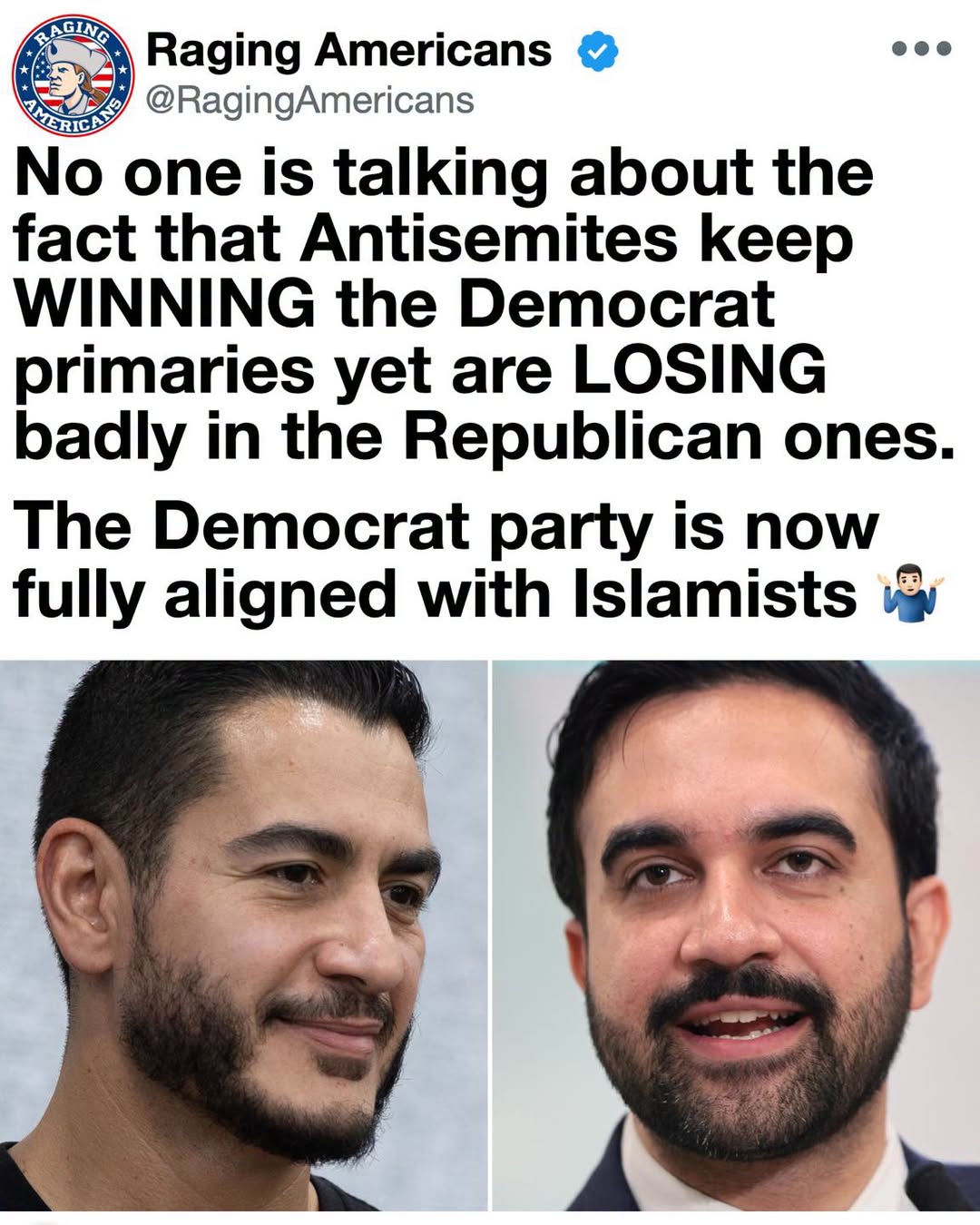
Across the country, an undeniable and deeply troubling pattern has taken hold in modern American politics that can no longer be ignored by honest observers. Candidates who openly traffic in anti-Jewish tropes, flirt with radical foreign ideologies, and express outright hostility toward Israel are increasingly advancing through competitive Democrat primaries. At the very same time, Republican voters are sending an unmistakable message by soundly rejecting and shutting down those same radical voices whenever they appear.
This striking divergence is not an accident of geography, nor is it a random collection of isolated political anomalies. It is the direct consequence of where the institutional momentum and grassroots energy within each party have deliberately chosen to migrate. Primary results expose fundamental priorities more clearly than any slick campaign speech ever could, laying bare an ideological chasm that is reshaping the nation.
For decades, support for the State of Israel and a firm, uncompromising stand against antisemitism were bedrock principles of bipartisan American governance. Leaders from both sides of the aisle recognized the moral imperative of standing with our closest democratic ally in the Middle East while fiercely protecting Jewish communities at home. Today, that historic consensus has been shattered, replaced by a fierce internal battle that is tilting one party in an increasingly radical direction.
The transformation inside the Democrat apparatus has been swift, aggressive, and systematically organized from the ground up by activist networks. In state after state, insurgent candidates backed by radical political factions have mounted aggressive primary challenges against mainstream incumbents, using anti-Israel rhetoric as a central organizing tool. What was once considered the radical fringe has successfully established deep beachheads in municipal councils, state legislatures, and the halls of Congress.
In deep-blue congressional districts spanning from urban centers in New York to progressive bastions in the Midwest, candidates openly hostile to the Jewish state are no longer treated as outliers. Instead, they are celebrated by progressive organizers, amplified across viral social media ecosystems, and rewarded with valuable endorsements from influential activist groups. Their ability to survive and even dominate competitive primaries proves that their message resonates directly with the activist base that turns out on election day.
This institutional shift became glaringly obvious in the aftermath of the horrific terrorist attacks of October 7, when the moral lines of global politics were redrawn in blood. While millions of patriotic Americans watched in absolute horror, segments of the progressive activist base rushed to rationalize, excuse, or outright celebrate the atrocities committed against innocent civilians. Rather than facing immediate political exile, many candidates aligned with that very movement saw their grassroots fundraising surge and their standing within the progressive coalition solidify.
The ripple effects of this ideological takeover were put on full display across American college campuses throughout the subsequent months. Tents were pitched, university quads were occupied, and aggressive mobs openly chanted genocidal slogans targeting the Jewish people and the Jewish homeland. Far from condemning this dangerous surge of hate, several prominent primary candidates visited the encampments, posed for photos with agitators, and adopted their extreme policy demands wholesale.
When radical street activists see their slogans embraced by aspiring lawmakers, it creates a toxic feedback loop that moves the Overton window further to the left. Local party organizations frequently hesitate to issue clear condemnations for fear of alienating a vocal, highly motivated wing of young progressive voters. Consequently, candidates who build their platforms on delegitimizing Israel find a receptive audience and an open path to power within the party structure.
Even in races where pro-Israel groups have spent tens of millions of dollars to repel radical candidates, the underlying primary numbers tell a chilling story. The sheer volume of grassroots votes captured by candidates with records of hostile rhetoric demonstrates that the ideological rot runs far deeper than individual personalities. It reveals an institutional environment where anti-Israel sentiment is increasingly treated not as a disqualifying liability, but as a badge of progressive courage.
The Conservative Firewall and the Grassroots Contrast
On the other side of the political spectrum, the dynamic could not possibly be more different or more decisive. Republican primary voters have consistently demonstrated a zero-tolerance policy for candidates who attempt to inject antisemitism, anti-Israel animus, or conspiratorial fringe tropes into the conservative movement. When fringe figures attempt to gain traction on the right by peddling hostility toward the Jewish people or Israel, they are swiftly and overwhelmingly crushed at the ballot box.
 California Man Pleads Guilty to Second-Degree Murder After Striking Teen Cyclists With Car
 Hoover woman Anastasia Sudarsana, found near a community pool where a 70-year-old acquaintance died, is charged with murder
 Chilling details revealed as Baltimore officer Daniel Oxendine is charged with raping domestic violence victim
The American conservative base remains steadfastly anchored in an unwavering commitment to Judeo-Christian values, national sovereignty, and strong international alliances. For the everyday Republican voter, standing shoulder-to-shoulder with Israel is not a cynical talking point subject to political convenience; it is a profound moral obligation. Candidates who fail to understand this foundational truth find themselves completely shut out of serious consideration by the primary electorate.
This uncompromising standard acts as an effective immune system within the Republican Party, purifying its ranks of ideological extremism before candidates ever reach a general election ballot. When fringe candidates attempt to cloak anti-Jewish grievances in the language of populist isolationism, Republican voters see through the deception immediately. The message sent by conservative primary voters has been loud, clear, and remarkably consistent: there is no room in this movement for antisemitic hatred.
Republican leaders and grassroots organizations have actively reinforced this firewall by holding their own accountable and establishing clear boundaries. Across suburban, rural, and working-class districts nationwide, conservative candidates compete on who will be the most reliable and steadfast defender of the U.S.-Israel alliance. This dynamic ensures that Republican nominees enter the general election with an unambiguous record of support for Jewish communities and international stability.
The contrast extends far beyond foreign policy debates into the fundamental defense of domestic law, order, and constitutional protections. While left-wing primary winners routinely amplify calls to defund the police and tolerate unlawful campus takeovers, conservative voters demand aggressive enforcement of civil rights protections for Jewish students. Republican officials have repeatedly spearheaded legislative efforts to strip federal funding from universities that allow antisemitic harassment to fester unchecked on their campuses.
This stark divergence in primary outcomes is fundamentally reshaping the electoral map and fracturing long-standing voting coalitions across the country. Jewish Americans, who historically voted overwhelmingly for Democrat candidates for generations, are now confronting a painful and inescapable reality about the modern political landscape. Many are openly questioning how they can remain loyal to an institution that repeatedly elevates leaders who question their community’s right to security and self-determination.
Independent voters and moderate patriots are likewise taking notice of which party is standing firm against extremism and which is actively appeasing it. Everyday citizens understand that a political movement willing to tolerate open bigotry against one group will inevitably turn its destructive focus on others. The primary election results serve as an early warning siren, signaling to the broader public exactly how each party intends to govern when handed the reins of power.
Campaign consultants often advise candidates to pivot toward the center during general election contests, attempting to scrub their records and soften their rhetoric for broader appeal. But voters are increasingly refusing to be deceived by late-stage political makeovers that contradict years of recorded statements and legislative votes. The true measure of a candidate’s character is not what they say when trying to win over swing voters, but what they said to win their party’s nomination in the first place.
When an aspiring lawmaker secures victory by activating a base animated by resentment and radical anti-Western ideologies, their primary allegiance remains tied to that very constituency. Once elected, they inevitably face immense pressure from the activists who put them in office to block foreign aid, boycott democratic allies, and weaken national security partnerships. The legislative record of modern progressive caucuses offers undeniable proof of this relentless pressure campaign in action.
The stakes of this ideological shift extend far beyond Washington politics, reverberating across the global stage where America’s adversaries watch our internal debates with keen interest. Rogue regimes and terrorist organizations understand that their greatest asset is the erosion of American resolve from within our own political institutions. When they see anti-Israel candidates advancing through major party primaries, they recognize an opening to exploit divisions and weaken the fabric of Western alliances.
In stark contrast, a strong and united American stance against antisemitism projects deterrence and stability across an increasingly chaotic and dangerous world. By decisively rejecting fringe voices, the Republican primary electorate reinforces America’s standing as an unyielding fortress of moral clarity and strength. It sends a reassuring signal to our allies that the United States remains a dependable partner capable of standing firm against terror and hatred.
As the nation moves deeper into critical election cycles that will determine the country’s trajectory, the contrast between the two party primaries stands in sharp, undeniable relief. One party continues to provide a welcoming runway for radical voices that traffic in ancient prejudices and hostile foreign agendas. The other party remains a disciplined, uncompromising firewall that shuts down those same destructive ideas before they can ever take root.
Americans who cherish freedom, moral clarity, and the foundational alliance between the United States and the Jewish people must pay close attention to these primary outcomes. Speeches are cheap, campaign advertisements are transient, and political promises are routinely broken, but the collective verdict of the ballot box never lies. The choices voters make in the primary booth reveal the true soul of a movement, and the dividing line in American politics has never been clearer.
No Comments yet!