National media fame is a seductive currency in modern American politics, promising instant relevance, viral fundraising clips, and the adoration of cable news panels. Yet, when the glaring lights of prime-time television meet the unforgiving reality of local voting booths, that currency routinely turns out to be entirely worthless.
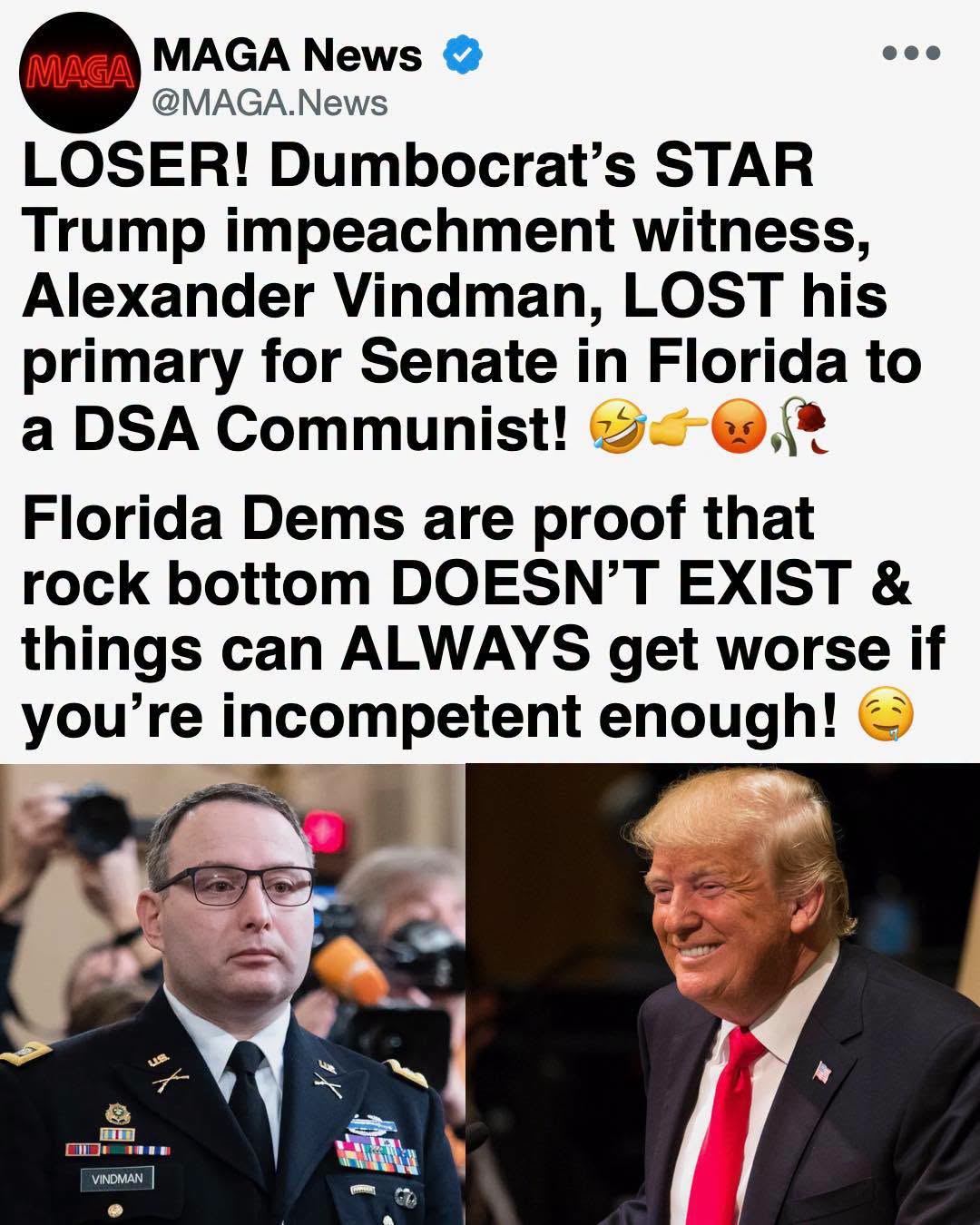
The recent, staggering defeat of a celebrated impeachment witness in a high-stakes Democratic Senate primary offers a brutal masterclass in the limits of manufactured political stardom. Instead of anointing a national celebrity who built an entire identity around televised clashes with Donald Trump, grassroots voters decisively handed the nomination to an insurgent candidate aligned with the Democratic Socialists of America.
It is a fitting, almost poetic political coda that lays bare a massive disconnect within the modern party apparatus. While political consultants and national pundits were convinced that anti-Trump nostalgia would easily sweep the field, local primary voters decided that unapologetic, far-left ideological conviction was far more compelling than yesterday’s courtroom drama.
The result did not just deliver an embarrassing upset; it sent shockwaves through a political establishment that remains hopelessly out of touch with the actual activist base. What appeared on paper to be an unstoppable campaign built on Beltway prestige disintegrated the moment it collided with energized ground-level organizing.
This primary showdown proves that political capital built on a single televised moment evaporates at breathtaking speed. When a candidate’s sole qualification is their appearance in a historic congressional hearing, they quickly discover that voters have long since turned the page.
For years, the national media ecosystem treated star witnesses from the Trump impeachment era as untouchable civic icons destined for high elective office. Glowing profiles in glossy magazines, six-figure book advances, and endless guest appearances on weekend panel shows created an intoxicating feedback loop of unearned inevitability.
Inside the coastal media bubble, it was simply assumed that these high-profile figures possessed an innate connection to the electorate. Campaign strategists calculated that millions of cable television viewers would automatically translate into passionate primary voters who would show up on election day.
That calculation fundamentally misunderstood the mood of a Democratic base that has grown deeply exhausted by procedural nostalgia. To millions of working-class and progressive voters, reliving the theatrical hearings of previous years offers zero solutions to soaring housing costs, inflation, and healthcare crises.
The candidate who swept in and captured the nomination understood precisely what the establishment missed. Rather than looking backward at past political battles, the DSA-aligned insurgent tapped into a raw, uncompromising economic populism that directly challenged corporate power and party orthodoxy.
While the celebrity candidate spent months delivering rehearsed monologues about institutional norms and constitutional decorum, the grassroots challenger was knocking on doors in neglected precincts. That stark contrast in energy and substance defined the entire trajectory of the race.
The Death of Resistance Nostalgia and the Rise of the New Left
Florida has once again cemented its reputation as the ultimate graveyard for national media narratives and manufactured political hype. The Sunshine State continues to expose the profound vulnerability of candidates whose only appeal is a carefully curated opposition to the former president.
In the complex and fiercely competitive terrain of Florida politics, generic party talking points do not survive contact with reality. Voters across diverse communities demand authenticity, visible community presence, and distinct ideological clarity over stale Beltway talking points.
By rejecting a candidate defined almost exclusively by an impeachment saga, local voters sent an unmistakable signal about the true priorities of the primary electorate. They made it painfully clear that resistance nostalgia is no longer a viable substitute for a tangible, forward-looking political platform.
The grassroots base of the Democratic Party has moved far beyond the cautious, procedural battles of the past. Today’s activist wing wants ideological fighters, not yesterday’s witnesses.
BREAKING NEWS!!>>
Ohio Sex Offender Sentenced to 22 Years and 10 Months in Federal Prison in Child Abuse Material Case
Massive Financial Reckoning: Kamala Harris Campaign Left in Crushing $17M Debt as Opponents Sit on Over $130M Cash
Cameron Cudney Sentenced to 5 Years After 100-MPH Police Chase Ends in Illinois Cornfield
The triumph of an open socialist candidate over a national media darling also illustrates the aggressive leftward drift of the party’s most active primary voters. Establishment operatives who believed they could comfortably steer the base toward moderate celebrity figures are finding themselves completely outmaneuvered.
When the energetic core of a political movement decides that radical systemic overhaul is required, polite institutionalists suddenly look like relics of an obsolete era. The impeachment witness, once hailed as a towering figure of moral courage, was swiftly discarded as expendable political baggage.
The financial disparity in the race only deepens the humiliation for the national political machine. Millions of dollars poured in from wealthy out-of-state donors who believed they were funding an inevitable victory, flooding mailboxes and airwaves with high-production advertisements.
Yet, those millions could not purchase the organic enthusiasm generated by hundreds of unpaid volunteers canvassing neighborhood by neighborhood. The grassroots apparatus built a disciplined coalition that simply overwhelmed the top-heavy, consultant-driven campaign of the frontrunner.
This dynamic reveals a widening chasm between the donor class that funds national campaigns and the actual voters who control the ballot box. While affluent contributors write checks based on viral social media clips, the electorate responds to candidates who address their material daily struggles.
The speed with which political relevance fades in the digital age should serve as a stark warning to political opportunists everywhere. A viral moment under the congressional dome can generate instant notoriety, but it cannot sustain a prolonged statewide political campaign.
Without deep institutional roots, localized organizing infrastructure, and a compelling domestic agenda, celebrity candidates are essentially running on empty fumes. Once the novelty of their televised testimony wore off, there was simply no durable foundation left to support the campaign.
Local voters clearly resented the presumption that a national profile entitled any candidate to an automatic coronation. The electorate refused to act as extras in a scripted political comeback narrative designed primarily for cable news consumption.
Inside party headquarters, the finger-pointing began almost immediately as operatives scrambled to rationalize how such a heavily favored candidate suffered such a catastrophic collapse. The usual excuses—low turnout, messaging misfires, and external interference—are already being circulated to deflect blame.
The undeniable truth, however, is far simpler and much harder for party insiders to swallow: the political strategy that produced this disaster was inherently flawed from the very beginning. Relying on past celebrity rather than present-day engagement is a recipe for guaranteed electoral failure.
This primary upset is not an isolated incident, but rather part of an accelerating trend reshaping American electoral dynamics. Across the country, voters are repeatedly punishing figures who treat public service as an extension of their personal media branding efforts.
As the political landscape continues to polarize, the middle ground between ideological radicalism and genuine populist appeal is rapidly vanishing. Candidates attempting to coast on vague appeals to institutional norms are finding themselves squeezed out from every direction.
The outcome in Florida definitively closes the chapter on the political viability of the Trump impeachment celebrity class. The voters have spoken, and their verdict demonstrates that holding a microphone in a congressional committee room does not make you a leader.
In the final analysis, American politics remains stubbornly, beautifully tied to the will of local communities rather than the preferences of television producers. Those who forget that fundamental truth are destined to watch their grand political ambitions crumble under the weight of their own arrogance.
No Comments yet!