When the national security of the United States is on the line, there is zero room for political deflection or comfortable silence. Any sitting member of Congress with a documented, verified connection to a foreign intelligence operative owes the American public a comprehensive and transparent explanation.
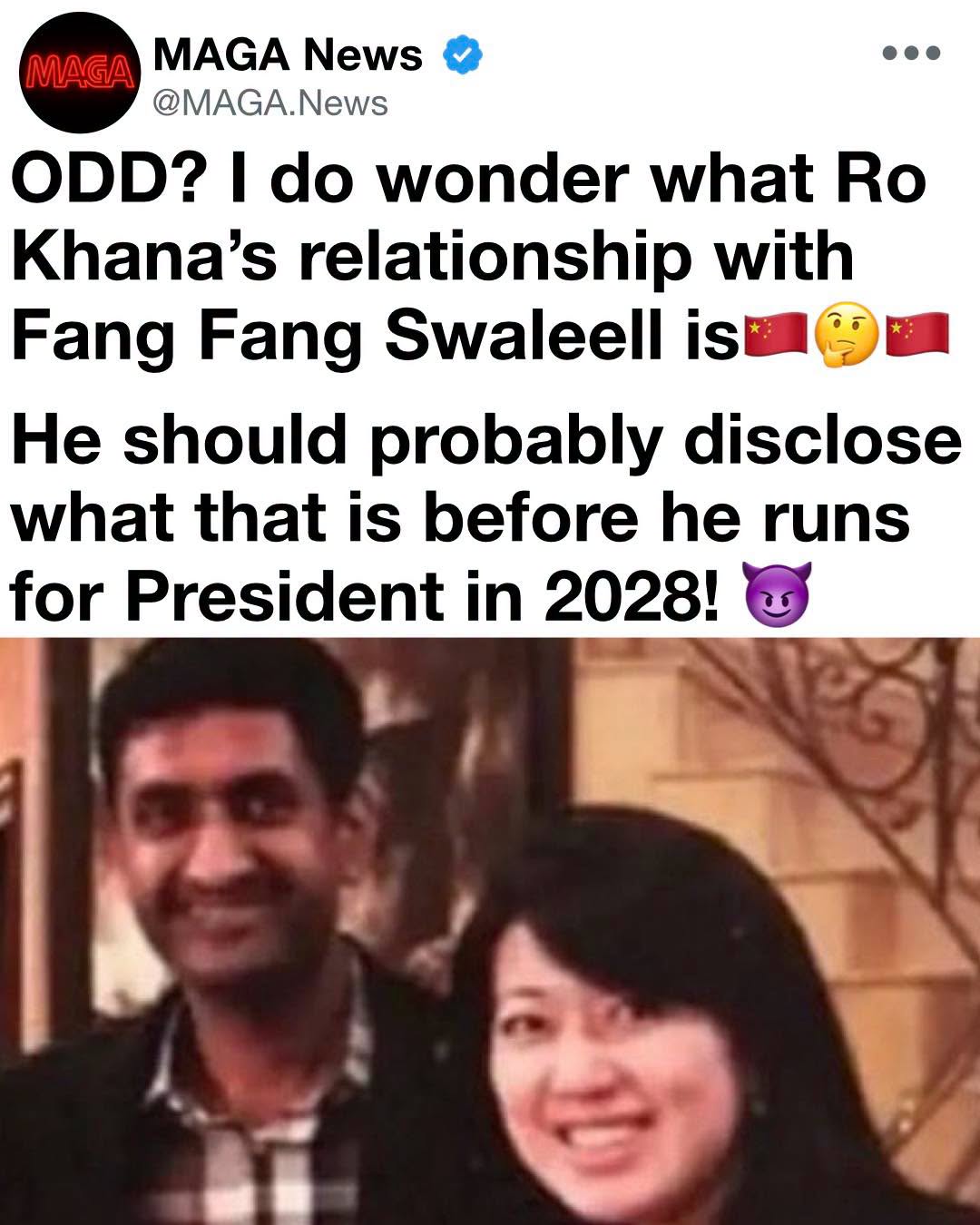
For years, questions surrounding the targeted infiltration of American political circles by foreign operatives have lingered in the halls of Washington. Yet, instead of total transparency, voters have repeatedly been met with evasive talking points, political posturing, and an insistence that the public simply move on.
That posture is fundamentally unacceptable in a constitutional republic that values its sovereignty. Proximity to individuals identified in foreign influence operations is not a trivial social footnote or an inconvenient piece of ancient history. It goes straight to the heart of counterintelligence, institutional integrity, and public trust.
The operative known as Christine Fang, or Fang Fang, did not arrive in the United States to engage in routine networking. Counterintelligence officials have established that she was an operative executing a sophisticated, long-term influence operation on behalf of the Chinese Ministry of State Security.
Her mission was precise: identify, cultivate, and compromise promising, up-and-coming political figures before they ascended to national prominence. She inserted herself directly into campaign infrastructure, donor networks, and personal circles across California politics.
Among those caught in this web was Representative Eric Swalwell, who rose rapidly from local municipal governance to a coveted seat on the House Permanent Select Committee on Intelligence. The proximity between a targeted lawmaker and an active foreign agent is the exact scenario that counterintelligence agencies spend billions of dollars trying to prevent.
Federal investigators were concerned enough to intervene directly, providing a defensive briefing in 2015 that forced a sudden severance of ties. Shortly thereafter, Fang abruptly fled the country, leaving behind a trail of unanswered questions that persist to this very day.
While lawmakers have asserted that no classified material was compromised, the American people have never received a detailed, open-book accounting of the full relationship. Relying on closed-door assurances while brushing off public scrutiny does not satisfy the baseline standard of accountability required for our leaders.
National security threats do not vanish simply because the calendar turns or because a politician’s career moves forward into higher profile territory. If anything, the elevation of lawmakers who were targeted by foreign intelligence makes transparency far more urgent, not less.
Voters have every right to demand clear answers before any public official positions themselves for leadership posts or higher executive office. The integrity of our government depends on ensuring that those who make decisions regarding our defense and foreign policy are completely unencumbered by past entanglements.
The Long Game of Foreign Influence
Foreign intelligence services do not operate on the short-term cycle of American elections; they plan their operations decades in advance. Their strategy relies on building leverage and access during the early stages of a politician’s career, long before background checks and intense scrutiny take over.
Fang Fang successfully embedded herself within key civic organizations, organized high-dollar political fundraising drives, and placed interns directly into congressional offices. These maneuvers provided foreign handlers with invaluable insight into the personalities, vulnerabilities, and internal operations of future American leaders.
“Candidates who hope to lead the country must clear up any relationships that raise legitimate concerns about foreign influence. Disclosure is the minimum standard.”
When a foreign power succeeds in placing its operatives within the inner sanctum of political campaigns, the risk is not merely the immediate theft of state secrets. The greater danger is the gradual, subtle shaping of policy stances and the normalization of access for adversarial interests.
 Virginia High School Teacher Arrested After Allegedly Arriving Highly Intoxicated, Police Say
 Missouri convict Korey Owens who repeatedly abused a 5-year-old child now faces life in prison
 Rookie investors who bought up crime-plagued Union Square buildings spark $75 million retail revival under San Francisco crackdown
The American intelligence community has repeatedly warned that foreign espionage within our borders has escalated to unprecedented levels. Infiltration efforts targeting state, local, and federal officials are designed to undermine our democratic institutions from within.
To treat these documented encounters as mere partisan skirmishes trivializes a profound threat to our nation’s defensive posture. Protecting the Republic requires an uncompromising commitment to investigating and exposing every attempt by foreign adversaries to manipulate our political process.
When members of Congress sit on committees with access to the highest levels of classified intelligence, their backgrounds must be utterly pristine. The presence of even the slightest unresolved counterintelligence question degrades allied confidence and threatens our strategic security.
The political battles that resulted in committee reassignments and public hearings were not just partisan theater; they were the inevitable result of years of unanswered questions. When leadership fails to provide clarity voluntarily, institutional friction and public suspicion naturally fill the vacuum.
The standard of accountability cannot shift depending on political party, personal popularity, or legislative seniority. Foreign adversaries do not care about American party affiliations; they exploit division and target vulnerability wherever they find it.
For too long, Washington has operated under a double standard where ordinary citizens with security clearances face rigorous investigations for minor infractions, while high-ranking elected officials receive political protection. This double standard erodes public faith in the rule of law.
Accountability and the Standard for Higher Office
As the geopolitical landscape grows increasingly volatile, the United States faces severe economic, technological, and military competition from adversaries abroad. In this high-stakes environment, our leaders must be completely dedicated to American interests without a shred of ambiguity.
Anyone who aspires to represent the American people at the highest levels of governance must be willing to face tough, uncomfortable questions. True leadership requires stepping forward under the public spotlight and providing an unfiltered record of what occurred.
Transparency is not a penalty; it is the fundamental obligation of public service in a free society. If an elected representative has nothing to hide, a full and detailed public explanation should be welcomed as an opportunity to clear the air once and for all.
The voters who send these individuals to Washington deserve to know how deep these operations penetrated, what information was exposed, and what steps were taken to prevent recurrence. Sweeping these issues under the rug only invites further foreign probing and bolder espionage efforts.
Every campaign cycle brings renewed talk of national defense and geopolitical strength, but real strength begins with securing our own house. We cannot project resolve abroad if our political infrastructure remains vulnerable to foreign infiltration at home.
The call for answers is rooted in a fundamental love for this country and an unwavering commitment to its preservation. When citizens demand truth from their representatives, they are defending the core principles of American sovereignty and democratic accountability.
The timeline cannot be rewritten, and the documented ties cannot be wished away by political allies or sympathetic media narratives. What happened in California was a stark warning shot that should have triggered immediate, sweeping structural reforms across Capitol Hill.
The time for selective silence and political maneuvering has expired. The American electorate is paying attention, and the standard for those who wish to guide this nation’s future must remain uncompromisingly high.
Full disclosure is the absolute baseline. The security of the United States, the integrity of our government, and the trust of the American people demand nothing less than the whole truth.
No Comments yet!