In a masterclass of economic leverage that has left globalist bureaucrats reeling, the Trump administration has once again demonstrated how real power is wielded on the international stage. By implementing a high-stakes, surgical pause on sweeping tariffs against select Canadian goods, Washington sent an unmistakable signal across the northern border.
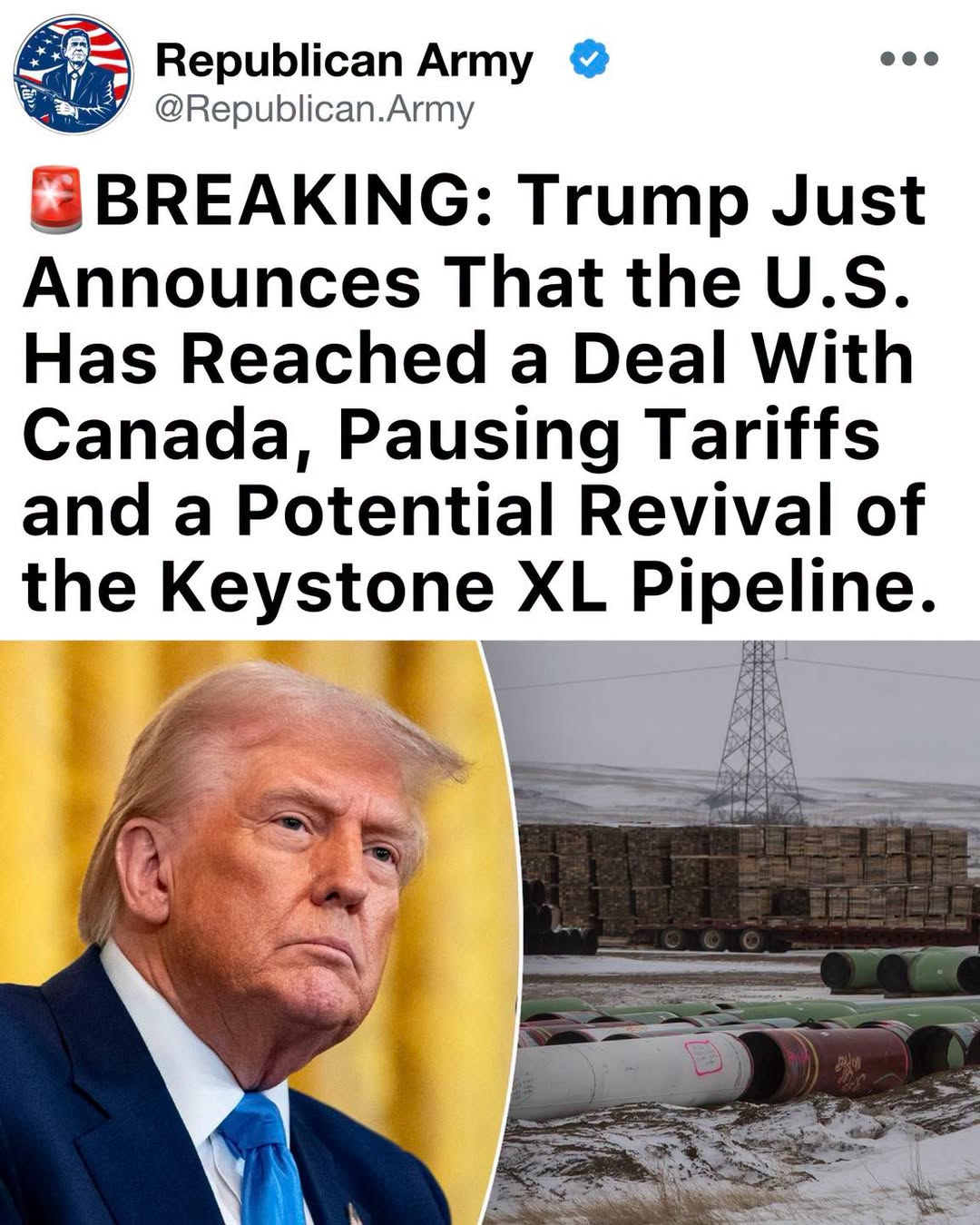
The message was loud, clear, and delivered with the force of an economic sledgehammer: the era of one-sided trade concessions and polite American capitulation is permanently over. Within hours of the strategic maneuver, officials in Ottawa were scrambling to schedule high-level bilateral talks to address longstanding American grievances.
For decades, career politicians in Washington allowed foreign partners to exploit American goodwill under the guise of diplomatic politeness. That passive approach gutted our manufacturing base, undermined our family farms, and surrendered North American energy dominance to hostile foreign rivals.
Today, the landscape is dramatically different because the rules of engagement are dictated by raw results rather than diplomatic platitudes. By leveraging a targeted three-day tariff pause, the administration created an immediate pressure cooker that forced Canadian negotiators to confront issues they have dodged for generations.
This bold maneuver is not merely about adjusting cross-border balance sheets; it represents a comprehensive doctrine of economic nationalism that puts American workers first. From dairy barns in Wisconsin and auto plants in the Midwest to the oil fields of West Texas, the American producer is back at the center of foreign policy.
Breaking the Trade Stranglehold
At the very top of the negotiating agenda is Canada’s notorious and protectionist dairy supply management system, which has penalized American producers for decades. American dairy farmers have long been locked out of Canadian grocery aisles through exorbitant tariffs and market manipulation schemes like the controversial Class 7 pricing class.
These restrictive practices have systematically blocked high-protein American dairy products from reaching fair retail shelves across Canada. For years, American farmers watched their profit margins shrink while Ottawa protected its own domestic cartels with virtual impunity.
Now, with decisive tariff pressure looming directly over their broader export economy, Canadian officials are being forced to negotiate structural reforms. American farmers are not asking for government handouts or special favors; they are demanding the open, fair access that any genuine trade partnership requires.
The battle for automotive fairness is equally fierce as both nations navigate a deeply integrated cross-border supply chain. The administration is demanding strict enforcement of country-of-origin rules to ensure that third-party nations cannot sneak cheap components into North America through backdoors.
Automotive workers across the American heartland have carried the burden of lax trade enforcement for far too long. By conditioning trade access on strict compliance, Washington is ensuring that high-paying manufacturing jobs remain firmly anchored on American soil.
Every vehicle rolling off an assembly line in Michigan, Ohio, or Texas must reflect the hard work and ingenuity of our domestic labor force. The days of allowing foreign competitors to exploit tariff loopholes while draining American industrial capacity have officially come to an end.
Beyond manufacturing and agriculture, the strategic revival of discussions surrounding the Keystone XL Pipeline marks a monumental turning point for North American energy security. When the previous administration cancelled Keystone XL on its very first day in office, it surrendered American energy independence to foreign adversaries.
That reckless executive decision instantly destroyed thousands of high-paying union pipeline jobs and dealt a crushing blow to American infrastructure momentum. It sent shockwaves through the energy corridors of Texas and the Great Plains, forcing our nation back into dependency on volatile foreign oil regimes.


Reopening serious discussions on Keystone XL demonstrates a clear, undeniable path toward total continental energy dominance. Connecting heavy crude reserves with state-of-the-art Gulf Coast refineries will supercharge American industrial output, lower fuel costs, and create tens of thousands of downstream jobs.
Energy independence is not just an economic priority; it is the absolute foundation of our national sovereignty and national defense. An America that produces, refines, and transports its own vast energy reserves is an America that cannot be bullied or blackmailed by foreign despots.
“True leadership does not apologize for protecting its own citizens; it uses every instrument of national power to ensure our workers, farmers, and energy producers win on the global stage.”
These intense bilateral discussions serve as a crucial prelude to the upcoming mandatory six-year review of the United States-Mexico-Canada Agreement (USMCA). Set to take center stage, the review mechanism ensures that trade agreements remain living, enforceable pacts rather than static sellouts of American interests.
Washington has made it unequivocally clear that the status quo will not be rubber-stamped without dramatic, measurable concessions. Every provision within the USMCA will be scrutinized to guarantee that it directly serves the economic and security interests of the American people.
The integrated strategy also links commercial trade directly with national security and border enforcement, establishing a cohesive front. Trade leverage is now being utilized as a powerful tool to compel international cooperation against cross-border smuggling networks and illicit trafficking.
A nation without secure borders cannot maintain economic prosperity, and an open border compromises every domestic industry from agriculture to logistics. By coordinating trade policy with border security, the administration has constructed an airtight framework for safeguarding American communities.
Nowhere is the impact of this America-First economic agenda felt more profoundly than in the great state of Texas. As the undisputed energy powerhouse and agricultural juggernaut of the nation, the Lone Star State thrives when trade deals reward hard work and punish bad actors.
Texas ranchers, pipeline builders, and refinery operators understand that economic strength requires uncompromising resolve at the negotiating table. The booming Texas economy serves as living proof that deregulation, domestic energy production, and strong trade enforcement create unmatched prosperity.
From the bustling ports of Houston and Corpus Christi to the sprawling ranches of West Texas, the momentum behind this aggressive trade policy is palpable. Everyday Americans are tired of weak leaders who apologize for national greatness while foreign rivals take advantage of our open markets.
The populist mandate across the country is clear: defend our domestic industries, rebuild our hollowed-out manufacturing hubs, and unleash American energy. The American people voted for decisive action, unapologetic patriotism, and measurable economic victories, and that is precisely what they are receiving.
As negotiations continue, Ottawa now understands that the old playbook of stalling tactics and diplomatic delays will no longer function. The ticking clock on the tariff pause serves as a relentless reminder that Washington holds the dominant cards in this economic relationship.
Strength is the only currency respected in international statecraft, and the Trump administration has put that truth on full display for the world to see. By standing firm against unfair trade practices, the White House has reset the rules of global commerce in favor of the American worker.
The blueprint for sustained national renewal is clear: strong borders, dominant domestic energy, uncompromising trade deals, and total faith in the American worker. The victory unfolding in these negotiations is a powerful testament to what happens when leaders refuse to back down and put America First.
No Comments yet!