The highest court in the land has finally delivered a long-overdue reckoning to an immigration system pushed past its breaking point. In a monumental and decisive ruling, the Supreme Court has cleared the legal runway for the federal government to terminate Temporary Protected Status designations that were never meant to last forever.
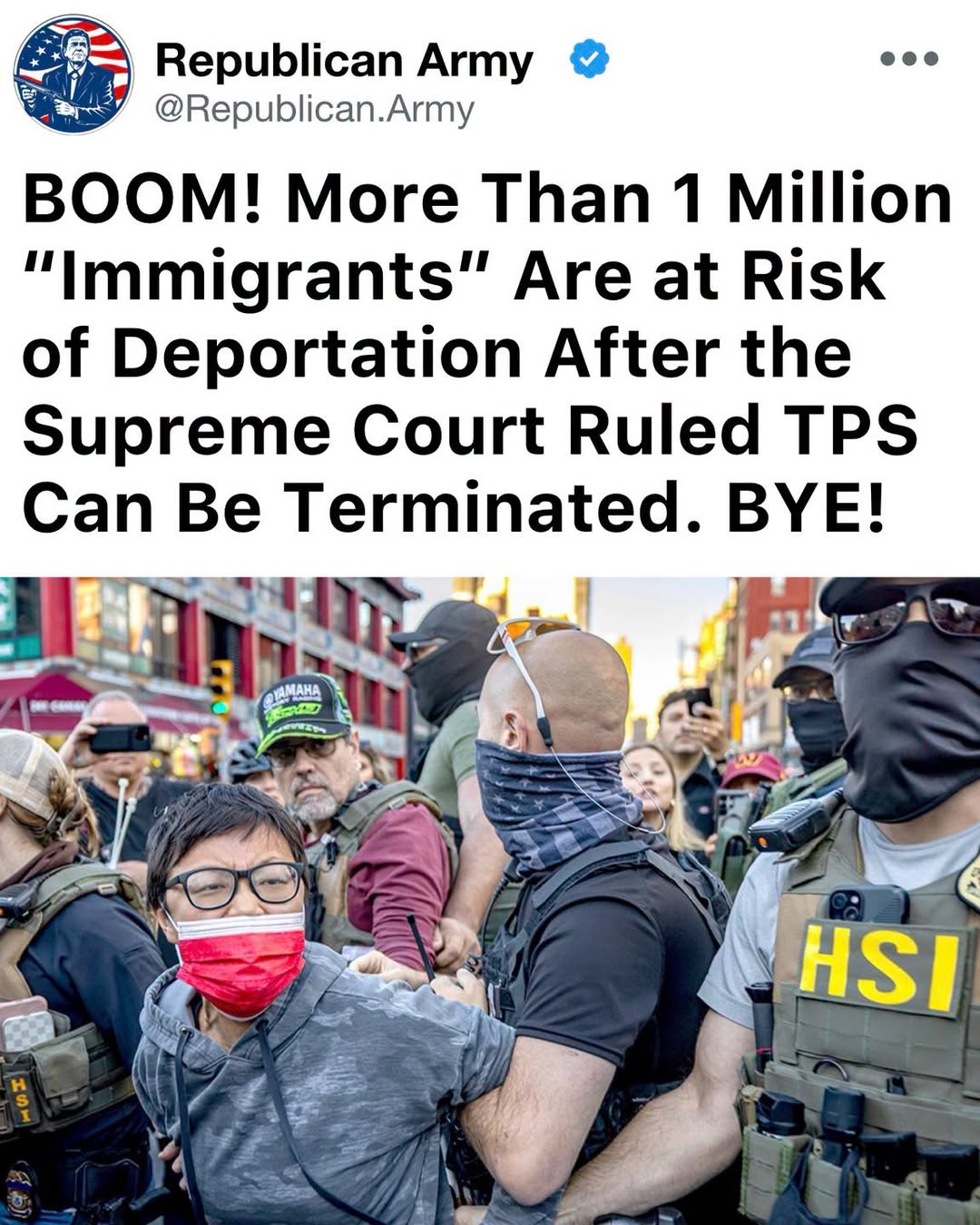
For decades, unelected bureaucrats and activist judges treated the word “temporary” as an open-ended suggestion rather than a statutory mandate. Now, the constitutional order has been restored, establishing once and for all that temporary relief programs cannot be transformed into perpetual, backdoor amnesties through sheer administrative inertia.
The core principle at stake could not be simpler or more fundamental to the American republic: words in federal statutes actually mean what they say. When a crisis subsides or a statutory timeline expires, the special protections granted under emergency authority must come to a definitive and orderly conclusion.
Over one million foreign nationals now face the direct legal consequences of an administrative system that spent years promising what the law never permitted. For far too long, politicians kicked the can down the road, choosing political convenience over legal fidelity while leaving local communities to shoulder the mounting costs.
From the borderlands of Texas to working-class suburbs across the American heartland, the real-world fallout of unmanaged, open-ended migration programs has reached a boiling point. This landmark ruling puts an abrupt halt to the endless cycle of automatic extensions, reinforcing the basic truth that national sovereignty requires enforceable limits.
To understand the magnitude of this decision, one must look back to the Immigration Act of 1990, when Congress originally created Temporary Protected Status. Lawmakers crafted the program as a short-term humanitarian shield, designed to offer safe harbor to foreign nationals temporarily caught in the United States during acute foreign disasters.
The statutory framework was deliberately narrow, explicitly built to address sudden catastrophic earthquakes, unprecedented hurricanes, or spontaneous armed conflicts in foreign nations. The law clearly envisioned that once the dust settled, infrastructure was repaired, and stability returned, recipients would return home to rebuild their own nations.
Instead, successive federal administrations weaponized the humanitarian provision into a permanent fixture of executive overreach, routinely rubber-stamping blanket renewals for decades on end. Nations that experienced natural disasters nearly a quarter-century ago somehow remained permanently designated under the guise of an ongoing emergency.
This administrative gamesmanship completely bypassed Congress, creating an unlegislated, de facto legal status for hundreds of thousands who had no permanent statutory right to remain. It effectively created a shadow immigration pipeline that operated completely outside the rigorous vetting, quotas, and merit requirements mandated by federal law.
The inevitable result was an unmitigated disaster for the rule of law, undermining the very foundation of legal immigration while placing immense strains on public infrastructure. Public schools, healthcare networks, municipal budgets, and local housing markets have borne the hidden, compounding weight of unchecked federal deferrals for over two decades.
A Decisive Blow Against Judicial Overreach
For years, whenever the executive branch attempted to faithfully execute the law and wind down expired designations, activist legal organizations raced to sympathetic district courtrooms. These rogue judges repeatedly issued sweeping nationwide injunctions, claiming that the presidency lacked the basic authority to manage or terminate its own executive designations.
The Supreme Court has now completely dismantled that activist roadblock, reaffirming that the executive branch holds explicit statutory authority to assess foreign conditions and end outdated protections. The ruling makes it unmistakably clear that unelected federal judges do not have the constitutional authority to micromanage foreign policy or immigration enforcement.
“Temporary means temporary. When conditions in home countries change or designations expire, the law requires departure. Endless extensions only undermine the integrity of our immigration system.”
By striking down lower-court obstructionism, the justices reaffirmed the separation of powers that anchors American jurisprudence. The executive branch has the unambiguous responsibility to enforce statutory boundaries, and the judiciary has no constitutional business converting emergency humanitarian gestures into lifelong entitlements.
This legal victory directly vindicates state leaders, led by Texas, who have tirelessly fought to protect their communities from the cascading consequences of federal inaction. For years, Texas has stood on the front lines of the border crisis, deploying state resources and legal challenges to force the federal government to honor its constitutional duties.



The financial and social burdens of endless administrative deferrals have never been distributed equally across the nation; they fall hardest on frontline states. Border communities and high-density metropolitan areas have witnessed their emergency services stretched thin, local tax revenues drained, and municipal budgets cannibalized to manage uncontrolled demographic pressure.
Moreover, the multi-decade abuse of temporary programs dealt a profound insult to the millions of lawful immigrants waiting patiently in line across the globe. Millions of aspiring Americans follow the rules, pay thousands of dollars in fees, undergo exhaustive background checks, and wait years for their legal visas to be processed.
Allowing over a million individuals to bypass those standard channels through endless administrative extensions eroded the moral authority of the entire legal immigration framework. It sent a dangerous message to the world: that following American laws is optional, and that temporary crisis protections can be indefinitely converted into permanent residency if you simply outlast federal willpower.
The economic ramifications for American workers have been equally severe, particularly in blue-collar industries where subsidized, unvetted labor markets suppress local wages. Working-class citizens have found themselves competing directly against vast pools of administrative status holders, artificially driving down compensation in construction, manufacturing, and service sectors.
Housing affordability, an increasingly desperate crisis for young American families trying to purchase their first homes, has been directly exacerbated by this continuous artificial demand. When hundreds of thousands of individuals who were legally required to depart remain indefinitely in concentrated metropolitan markets, rental costs surge and housing inventory vanishes.
Reclaiming Sovereignty and Prioritizing Legal Order
As expected, the open-borders advocacy complex and corporate-backed lobbying groups immediately launched a coordinated media campaign to denounce the Supreme Court’s ruling. Corporate media outlets quickly flooded the airwaves with breathless emotional appeals, willfully ignoring the statutory text, constitutional limits, and decades of administrative overreach.
Yet no amount of media spin can obscure the straightforward reality that sovereign nations must have clearly defined, enforceable borders. The United States cannot function as the world’s default guarantor of permanent residency every time an environmental or political disturbance occurs anywhere on the planet.
Conditions in nations designated decades ago have dramatically evolved, with many of those countries actively welcoming foreign tourism, expanding commerce, and rebuilding their domestic economies. Continuing to claim that these nations are permanently incapable of receiving their own citizens is an insult to their sovereignty and an absurdity under American law.
National security concerns also demand an immediate end to rolling, blanket administrative extensions that lack rigorous, individualized re-vetting procedures. Operating a system where hundreds of thousands of individuals remain within American borders under decades-old provisional status presents an unacceptable vulnerability for domestic security and law enforcement agencies.
The Supreme Court’s ruling now paves the way for a structured, lawful, and orderly wind-down process that prioritizes national security and the rule of law. Orderly departures, coordinated repatriations, and the enforcement of statutory departure dates will finally restore integrity to a system that had become an international laughingstock.
This ruling delivers an unmistakable message across the globe that the era of exploiting humanitarian loopholes to circumvent American immigration law is officially over. Sovereign nations possess the fundamental, non-negotiable right to determine who enters, who stays, and when temporary permissions must legitimately expire.
The precedent set by this case extends far beyond Temporary Protected Status; it strikes at the very heart of the unaccountable administrative state. It signals a broad judicial realignment back toward statutory originalism, forcing federal agencies to follow the precise text written by Congress rather than inventing novel authorities out of thin air.
Americans across every political divide are exhausted by an immigration system that routinely puts the interests of foreign nationals and corporate lobbyists ahead of domestic citizens. The public demand for order, accountability, and absolute transparency has finally found a receptive ear in the highest court in the nation.
Texas and its allied states have proven that relentless legal pressure, constitutional conviction, and state-level leadership can successfully halt federal overreach in its tracks. By holding the line against bureaucratic complacency, state leaders have secured a massive victory for constitutional governance and the rule of law.
The Supreme Court has rightly reaffirmed that the law means exactly what it says, and that no temporary program can be allowed to eclipse the sovereign rights of the American people. As the legal system returns to its constitutional foundations, the path is finally clear to rebuild an immigration apparatus that prioritizes legal order, enforces national borders, and puts American citizens first.
No Comments yet!